
 图片节点 2
取九宫格分镜中第3行第3列的分镜单图
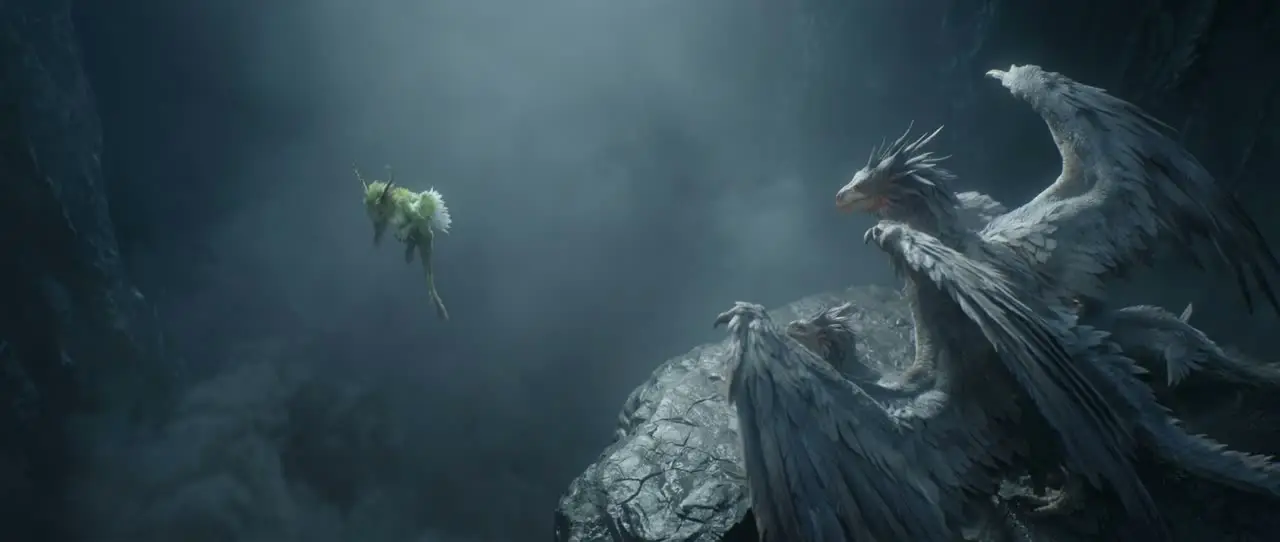 视频截图视频节点 3
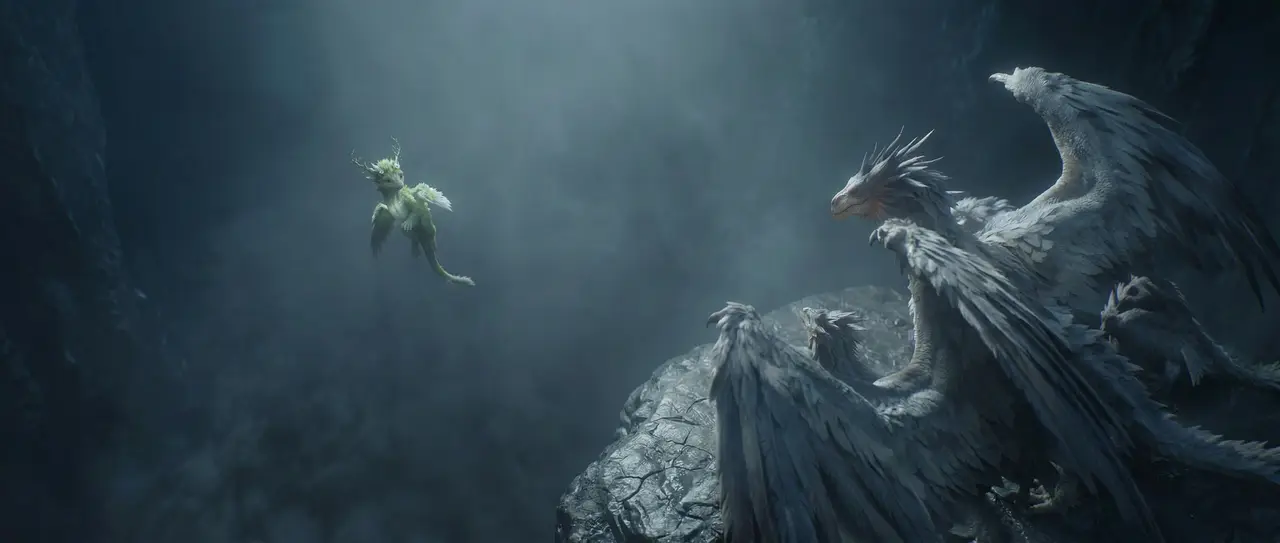
小龙兽难过的飞走离开。说明:可以生成音效,不要生成音乐。
提取九宫格分镜图中的第3行第3列的分镜单图
提取九宫格分镜中第3行第3列的分镜单图.
提取九宫格分镜中第2行第3列的分镜单图.
提取九宫格分镜中第3行第2列的分镜单图.
提取九宫格分镜中第1行第3列的分镜单图.增加画面细节质感
The little mythical beast was bitten by a monster in the rainforest and was on the brink of death <instruction> **Role:** Cinematic Director & Storyboard Artist **Task:** Create a 3x3 "Cinematic Montage Grid" based on the input image. **Goal:** Depict a **progressive storyline** (Time t=0s to t=5s) while simultaneously using **diverse camera angles and focal lengths**. **Directive:** Do NOT just show the same moment from different angles. Do NOT just show a static camera with moving subjects. **YOU MUST combine "Time Progression" with "Camera Movement".** **The Narrative Arc (3x3 Grid Structure):** **Row 1: The Setup (Time: Start | Wide & Dynamic)** * **Panel 1 (Extreme Long Shot):** Establishing the scene. The subject is entering the space or starting the action. * **Panel 2 (Long Shot / Low Angle):** The subject moves closer. Camera looks up to emphasize presence. Action is initiating. * **Panel 3 (Full Shot / Tracking):** Subject is in full motion. Camera tracks alongside them. **Row 2: The Conflict/Action (Time: Middle | Mid-Range & Interaction)** * **Panel 4 (Medium Shot):** The core action occurs (e.g., interacting with an object, talking, fighting). Focus on body language. * **Panel 5 (Over-The-Shoulder / POV):** A perspective shift. Seeing what the subject sees or facing the subject directly during the peak of action. * **Panel 6 (Medium Close-Up):** The action intensifies. Camera pushes in. Focus shifts to the upper body/reaction. **Row 3: The Resolution/Detail (Time: End | Close & Intimate)** * **Panel 7 (Close-Up):** Tight focus on the face or main focal point. Capturing the emotional reaction or effort. * **Panel 8 (Extreme Close-Up / Macro):** A specific detail of the action (e.g., a hand gripping, an eye widening, a foot landing). * **Panel 9 (High Angle / Top Down):** The aftermath or final state. Looking down at the subject as the action concludes. **Visual Consistency Rules:** 1. **Subject Identity:** The character's face, costume, and props must remain identical across all shots. 2. **Lighting Continuity:** The direction and mood of the light (e.g., sunset, neon, diffuse) must match the original image exactly. 3. **Montage Flow:** The sequence should feel like a professionally edited movie trailer where cuts are fast but logically connected. </instruction> <output_format> A photorealistic 3x3 storyboard grid. - **Top Row:** Wide shots, movement starting. - **Middle Row:** Medium shots, action peaking. - **Bottom Row:** Close-ups/Angles, action concluding. High contrast, cinematic composition, distinct depth of field for each shot type. </output_format>
比例减小,幼小形态,颜色差别大一点,身上的花更多
The little mythical creature was injured in the rainforest <instruction> **Role:** Cinematic Director & Storyboard Artist **Task:** Create a 3x3 "Cinematic Montage Grid" based on the input image. **Goal:** Depict a **progressive storyline** (Time t=0s to t=5s) while simultaneously using **diverse camera angles and focal lengths**. **Directive:** Do NOT just show the same moment from different angles. Do NOT just show a static camera with moving subjects. **YOU MUST combine "Time Progression" with "Camera Movement".** **The Narrative Arc (3x3 Grid Structure):** **Row 1: The Setup (Time: Start | Wide & Dynamic)** * **Panel 1 (Extreme Long Shot):** Establishing the scene. The subject is entering the space or starting the action. * **Panel 2 (Long Shot / Low Angle):** The subject moves closer. Camera looks up to emphasize presence. Action is initiating. * **Panel 3 (Full Shot / Tracking):** Subject is in full motion. Camera tracks alongside them. **Row 2: The Conflict/Action (Time: Middle | Mid-Range & Interaction)** * **Panel 4 (Medium Shot):** The core action occurs (e.g., interacting with an object, talking, fighting). Focus on body language. * **Panel 5 (Over-The-Shoulder / POV):** A perspective shift. Seeing what the subject sees or facing the subject directly during the peak of action. * **Panel 6 (Medium Close-Up):** The action intensifies. Camera pushes in. Focus shifts to the upper body/reaction. **Row 3: The Resolution/Detail (Time: End | Close & Intimate)** * **Panel 7 (Close-Up):** Tight focus on the face or main focal point. Capturing the emotional reaction or effort. * **Panel 8 (Extreme Close-Up / Macro):** A specific detail of the action (e.g., a hand gripping, an eye widening, a foot landing). * **Panel 9 (High Angle / Top Down):** The aftermath or final state. Looking down at the subject as the action concludes. **Visual Consistency Rules:** 1. **Subject Identity:** The character's face, costume, and props must remain identical across all shots. 2. **Lighting Continuity:** The direction and mood of the light (e.g., sunset, neon, diffuse) must match the original image exactly. 3. **Montage Flow:** The sequence should feel like a professionally edited movie trailer where cuts are fast but logically connected. </instruction> <output_format> A photorealistic 3x3 storyboard grid. - **Top Row:** Wide shots, movement starting. - **Middle Row:** Medium shots, action peaking. - **Bottom Row:** Close-ups/Angles, action concluding. High contrast, cinematic composition, distinct depth of field for each shot type. </output_format>
黑蛇突然偷袭了小神兽,发射了毒水喷到小神兽身上,经过一番激斗,小神兽成功逃脱,飞走了,画面不要有明显视觉穿帮。 说明:可以生成音效,不要生成音乐
小神兽在空中挥动翅膀后落地,躺在石头上奄奄一息,天空开始下雨
小神兽奄奄一息闭上眼睛,镜头缓缓拉升,天空在下雨 说明:可以生成音效,不要生成音乐
The evil black snake is sleeping, and the small divine beast wakes it up. The snake is very angry。<instruction> **Role:** Cinematic Director & Storyboard Artist **Task:** Create a 3x3 "Cinematic Montage Grid" based on the input image. **Goal:** Depict a **progressive storyline** (Time t=0s to t=5s) while simultaneously using **diverse camera angles and focal lengths**. **Directive:** Do NOT just show the same moment from different angles. Do NOT just show a static camera with moving subjects. **YOU MUST combine "Time Progression" with "Camera Movement".** **The Narrative Arc (3x3 Grid Structure):** **Row 1: The Setup (Time: Start | Wide & Dynamic)** * **Panel 1 (Extreme Long Shot):** Establishing the scene. The subject is entering the space or starting the action. * **Panel 2 (Long Shot / Low Angle):** The subject moves closer. Camera looks up to emphasize presence. Action is initiating. * **Panel 3 (Full Shot / Tracking):** Subject is in full motion. Camera tracks alongside them. **Row 2: The Conflict/Action (Time: Middle | Mid-Range & Interaction)** * **Panel 4 (Medium Shot):** The core action occurs (e.g., interacting with an object, talking, fighting). Focus on body language. * **Panel 5 (Over-The-Shoulder / POV):** A perspective shift. Seeing what the subject sees or facing the subject directly during the peak of action. * **Panel 6 (Medium Close-Up):** The action intensifies. Camera pushes in. Focus shifts to the upper body/reaction. **Row 3: The Resolution/Detail (Time: End | Close & Intimate)** * **Panel 7 (Close-Up):** Tight focus on the face or main focal point. Capturing the emotional reaction or effort. * **Panel 8 (Extreme Close-Up / Macro):** A specific detail of the action (e.g., a hand gripping, an eye widening, a foot landing). * **Panel 9 (High Angle / Top Down):** The aftermath or final state. Looking down at the subject as the action concludes. **Visual Consistency Rules:** 1. **Subject Identity:** The character's face, costume, and props must remain identical across all shots. 2. **Lighting Continuity:** The direction and mood of the light (e.g., sunset, neon, diffuse) must match the original image exactly. 3. **Montage Flow:** The sequence should feel like a professionally edited movie trailer where cuts are fast but logically connected. </instruction> <output_format> A photorealistic 3x3 storyboard grid. - **Top Row:** Wide shots, movement starting. - **Middle Row:** Medium shots, action peaking. - **Bottom Row:** Close-ups/Angles, action concluding. High contrast, cinematic composition, distinct depth of field for each shot type. </output_format>
一只母的小龙兽
镜头近景跟拍走路
定机位,小神兽在空中挥动翅膀后落地,躺在石头上奄奄一息,天空开始下雨 {{CameraPreset 1}}
黑蛇突然偷袭了小神兽,发射了毒水喷到小神兽身上,经过一番激斗,小神兽成功逃脱,飞走了 说明:可以生成音效,不要生成音乐
黑蛇突然偷袭了小神兽,经过一番激斗,小神兽成功逃脱,飞走了 说明:可以生成音效,不要生成音乐
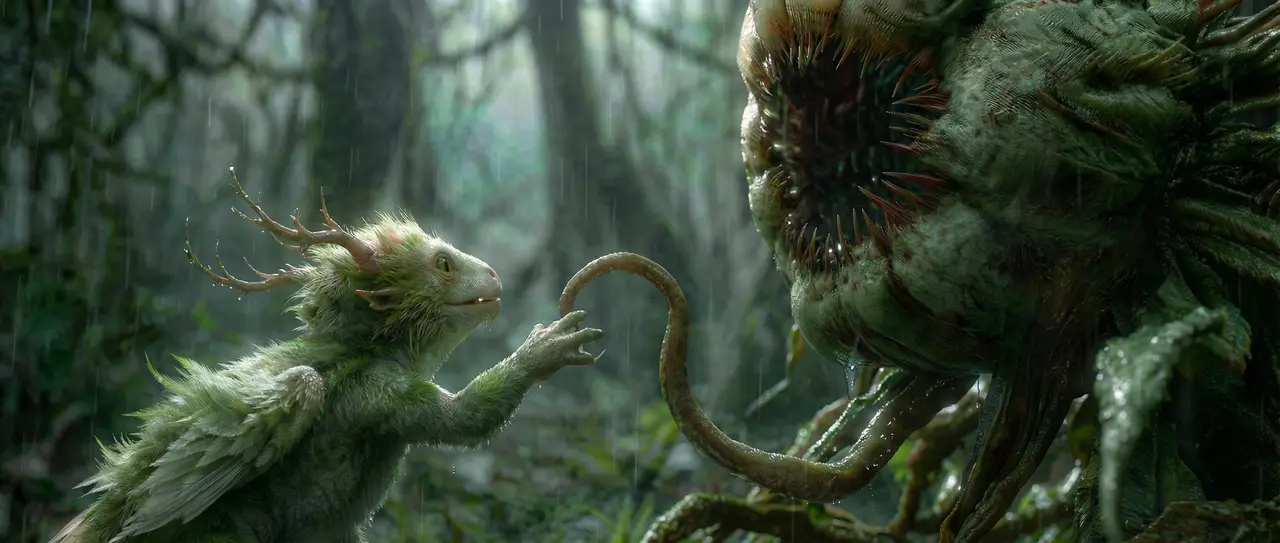
小神兽从左边走过来,好奇的看着眼前这个巨大的食人花,食人花微微蠕动,发出一种奇怪的声音,看上去没有任何危险。 说明:可以生成音效,不要生成音乐
小神兽从左边走过来,好奇的看着眼前这个巨大的食人花,食人花微微蠕动,发出一种奇怪的声音,看上去没有任何危险。营造出一种可爱温馨的氛围。 说明:可以生成音效,不要生成音乐
小神兽好奇的看着眼前这个巨大的食人花,食人花微微蠕动,发出一种奇怪的声音,看上去没有任何危险,营造出一种可爱温馨的氛围。 说明:可以生成音效,不要生成音乐
小神兽好奇的看着眼前这个巨大的食人花,食人花微微蠕动,看上去没有任何危险,营造出一种可爱温馨的氛围,食人花发出一种奇怪的声音 说明:可以生成音效,不要生成音乐
提取九宫格分镜中第1行第2列的分镜单图.增加画面细节质感,增加雾气
The carnivorous plant wanted to eat this little divine beast. After a struggle, the little divine beast escaped. <instruction> **Role:** Cinematic Director & Storyboard Artist **Task:** Create a 3x3 "Cinematic Montage Grid" based on the input image. **Goal:** Depict a **progressive storyline** (Time t=0s to t=5s) while simultaneously using **diverse camera angles and focal lengths**. **Directive:** Do NOT just show the same moment from different angles. Do NOT just show a static camera with moving subjects. **YOU MUST combine "Time Progression" with "Camera Movement".** **The Narrative Arc (3x3 Grid Structure):** **Row 1: The Setup (Time: Start | Wide & Dynamic)** * **Panel 1 (Extreme Long Shot):** Establishing the scene. The subject is entering the space or starting the action. * **Panel 2 (Long Shot / Low Angle):** The subject moves closer. Camera looks up to emphasize presence. Action is initiating. * **Panel 3 (Full Shot / Tracking):** Subject is in full motion. Camera tracks alongside them. **Row 2: The Conflict/Action (Time: Middle | Mid-Range & Interaction)** * **Panel 4 (Medium Shot):** The core action occurs (e.g., interacting with an object, talking, fighting). Focus on body language. * **Panel 5 (Over-The-Shoulder / POV):** A perspective shift. Seeing what the subject sees or facing the subject directly during the peak of action. * **Panel 6 (Medium Close-Up):** The action intensifies. Camera pushes in. Focus shifts to the upper body/reaction. **Row 3: The Resolution/Detail (Time: End | Close & Intimate)** * **Panel 7 (Close-Up):** Tight focus on the face or main focal point. Capturing the emotional reaction or effort. * **Panel 8 (Extreme Close-Up / Macro):** A specific detail of the action (e.g., a hand gripping, an eye widening, a foot landing). * **Panel 9 (High Angle / Top Down):** The aftermath or final state. Looking down at the subject as the action concludes. **Visual Consistency Rules:** 1. **Subject Identity:** The character's face, costume, and props must remain identical across all shots. 2. **Lighting Continuity:** The direction and mood of the light (e.g., sunset, neon, diffuse) must match the original image exactly. 3. **Montage Flow:** The sequence should feel like a professionally edited movie trailer where cuts are fast but logically connected. </instruction> <output_format> A photorealistic 3x3 storyboard grid. - **Top Row:** Wide shots, movement starting. - **Middle Row:** Medium shots, action peaking. - **Bottom Row:** Close-ups/Angles, action concluding. High contrast, cinematic composition, distinct depth of field for each shot type. </output_format>
花的颜色丰富一点
把画面扩充至21:9的尺寸,去掉左上角的文本,增加画面细节质感
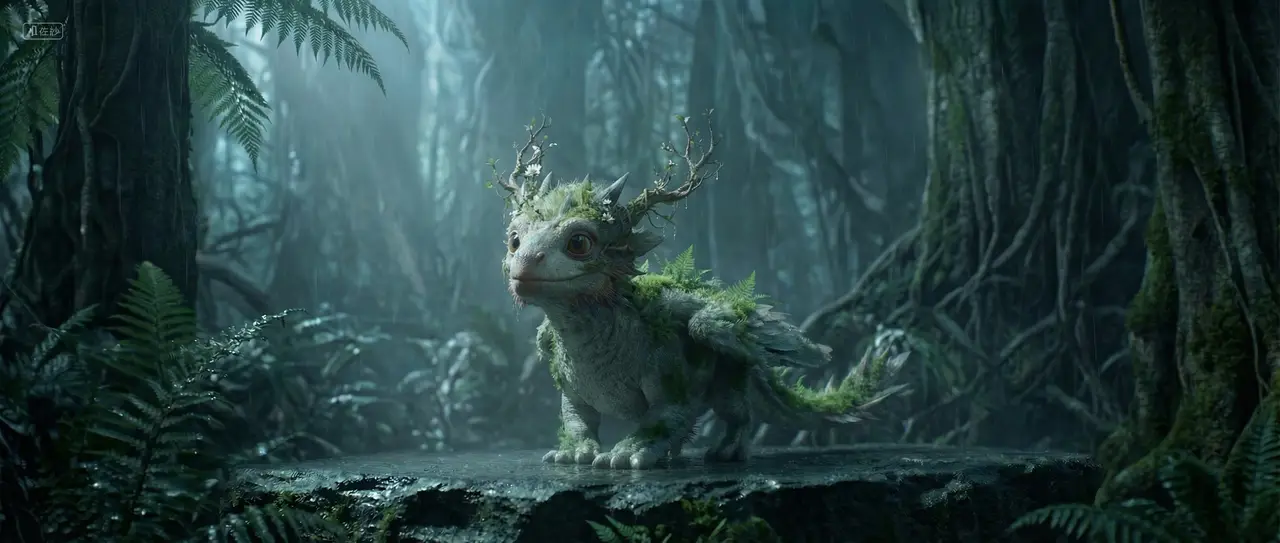 图片节点 11
比例减小,幼小形态
{{Image 1}} 画面色调与氛围与 {{Image 2}} 匹配,其他不变
提取九宫格分镜中第3行第2列的分镜单图.增加画面细节质感,增加雾气
提取九宫格分镜中第3行第1列的分镜单图.增加画面细节质感,增加雾气
提取九宫格分镜中第2行第2列的分镜单图.增加画面细节质感,增加雾气
提取九宫格分镜中第2行第1列的分镜单图.增加画面细节质感,增加雾气
The little mythical beast was walking in the rainforest millions of years ago when it discovered a man-eating flower. <instruction> **Role:** Cinematic Director & Storyboard Artist **Task:** Create a 3x3 "Cinematic Montage Grid" based on the input image. **Goal:** Depict a **progressive storyline** (Time t=0s to t=5s) while simultaneously using **diverse camera angles and focal lengths**. **Directive:** Do NOT just show the same moment from different angles. Do NOT just show a static camera with moving subjects. **YOU MUST combine "Time Progression" with "Camera Movement".** **The Narrative Arc (3x3 Grid Structure):** **Row 1: The Setup (Time: Start | Wide & Dynamic)** * **Panel 1 (Extreme Long Shot):** Establishing the scene. The subject is entering the space or starting the action. * **Panel 2 (Long Shot / Low Angle):** The subject moves closer. Camera looks up to emphasize presence. Action is initiating. * **Panel 3 (Full Shot / Tracking):** Subject is in full motion. Camera tracks alongside them. **Row 2: The Conflict/Action (Time: Middle | Mid-Range & Interaction)** * **Panel 4 (Medium Shot):** The core action occurs (e.g., interacting with an object, talking, fighting). Focus on body language. * **Panel 5 (Over-The-Shoulder / POV):** A perspective shift. Seeing what the subject sees or facing the subject directly during the peak of action. * **Panel 6 (Medium Close-Up):** The action intensifies. Camera pushes in. Focus shifts to the upper body/reaction. **Row 3: The Resolution/Detail (Time: End | Close & Intimate)** * **Panel 7 (Close-Up):** Tight focus on the face or main focal point. Capturing the emotional reaction or effort. * **Panel 8 (Extreme Close-Up / Macro):** A specific detail of the action (e.g., a hand gripping, an eye widening, a foot landing). * **Panel 9 (High Angle / Top Down):** The aftermath or final state. Looking down at the subject as the action concludes. **Visual Consistency Rules:** 1. **Subject Identity:** The character's face, costume, and props must remain identical across all shots. 2. **Lighting Continuity:** The direction and mood of the light (e.g., sunset, neon, diffuse) must match the original image exactly. 3. **Montage Flow:** The sequence should feel like a professionally edited movie trailer where cuts are fast but logically connected. </instruction> <output_format> A photorealistic 3x3 storyboard grid. - **Top Row:** Wide shots, movement starting. - **Middle Row:** Medium shots, action peaking. - **Bottom Row:** Close-ups/Angles, action concluding. High contrast, cinematic composition, distinct depth of field for each shot type. </output_format>
提取九宫格分镜中第2行第1列的分镜单图.
The little mythical beast discovered a man-eating plant in the jungle <instruction> **Role:** Cinematic Director & Storyboard Artist **Task:** Create a 3x3 "Cinematic Montage Grid" based on the input image. **Goal:** Depict a **progressive storyline** (Time t=0s to t=5s) while simultaneously using **diverse camera angles and focal lengths**. **Directive:** Do NOT just show the same moment from different angles. Do NOT just show a static camera with moving subjects. **YOU MUST combine "Time Progression" with "Camera Movement".** **The Narrative Arc (3x3 Grid Structure):** **Row 1: The Setup (Time: Start | Wide & Dynamic)** * **Panel 1 (Extreme Long Shot):** Establishing the scene. The subject is entering the space or starting the action. * **Panel 2 (Long Shot / Low Angle):** The subject moves closer. Camera looks up to emphasize presence. Action is initiating. * **Panel 3 (Full Shot / Tracking):** Subject is in full motion. Camera tracks alongside them. **Row 2: The Conflict/Action (Time: Middle | Mid-Range & Interaction)** * **Panel 4 (Medium Shot):** The core action occurs (e.g., interacting with an object, talking, fighting). Focus on body language. * **Panel 5 (Over-The-Shoulder / POV):** A perspective shift. Seeing what the subject sees or facing the subject directly during the peak of action. * **Panel 6 (Medium Close-Up):** The action intensifies. Camera pushes in. Focus shifts to the upper body/reaction. **Row 3: The Resolution/Detail (Time: End | Close & Intimate)** * **Panel 7 (Close-Up):** Tight focus on the face or main focal point. Capturing the emotional reaction or effort. * **Panel 8 (Extreme Close-Up / Macro):** A specific detail of the action (e.g., a hand gripping, an eye widening, a foot landing). * **Panel 9 (High Angle / Top Down):** The aftermath or final state. Looking down at the subject as the action concludes. **Visual Consistency Rules:** 1. **Subject Identity:** The character's face, costume, and props must remain identical across all shots. 2. **Lighting Continuity:** The direction and mood of the light (e.g., sunset, neon, diffuse) must match the original image exactly. 3. **Montage Flow:** The sequence should feel like a professionally edited movie trailer where cuts are fast but logically connected. </instruction> <output_format> A photorealistic 3x3 storyboard grid. - **Top Row:** Wide shots, movement starting. - **Middle Row:** Medium shots, action peaking. - **Bottom Row:** Close-ups/Angles, action concluding. High contrast, cinematic composition, distinct depth of field for each shot type. </output_format>
{{Mixed 2}} 小神兽被食人花抓住, {{Mixed 1}} 小神兽的爪子 抓住了藤曼,藤曼瞬间被抓断。整个过程很快,镜头运动晃动,紧张感,恐惧感。主要生成 {{Mixed 1}} 的镜头 说明:可以生成音效,不要生成音乐
只提取九宫格分镜中第3行第2列的分镜单图.,保持原图不要变动
小神兽使劲挣脱反抗,剧情反转,小神兽成功逃脱/多镜头表演。生成视频 小神兽外形参考 说明:可以生成音效,不要生成音乐
小神兽被食人花抓到,,触角不断的勒紧,小神兽在反抗,经过激烈打斗,最终成功逃脱,画面紧张感,镜头运动紧张感,多镜头诠释.样子参考图2 说明:可以生成音效,不要生成音乐
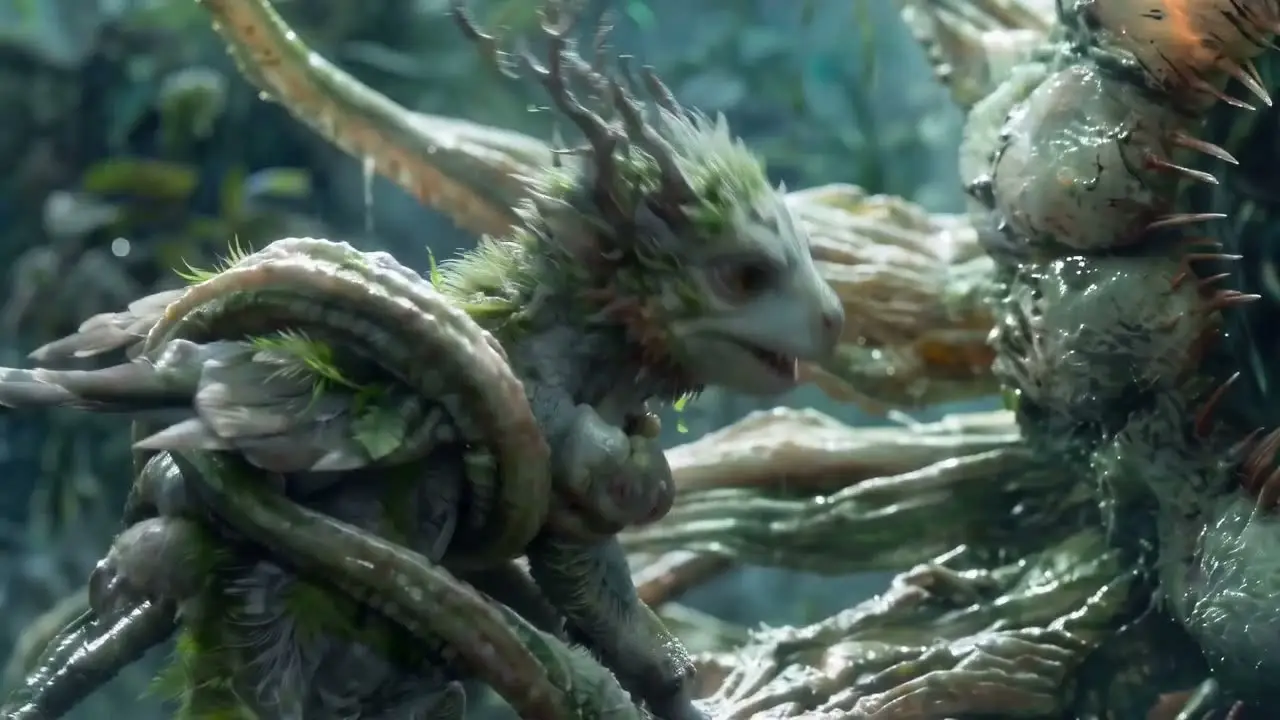
小神兽被食人花抓到,,触角不断的勒紧,小神兽在反抗,画面紧张感,镜头运动紧张感 说明:可以生成音效,不要生成音乐
小神兽朝对面咆哮,声音属于那种萌萌的。 说明:可以生成音效,不要生成音乐
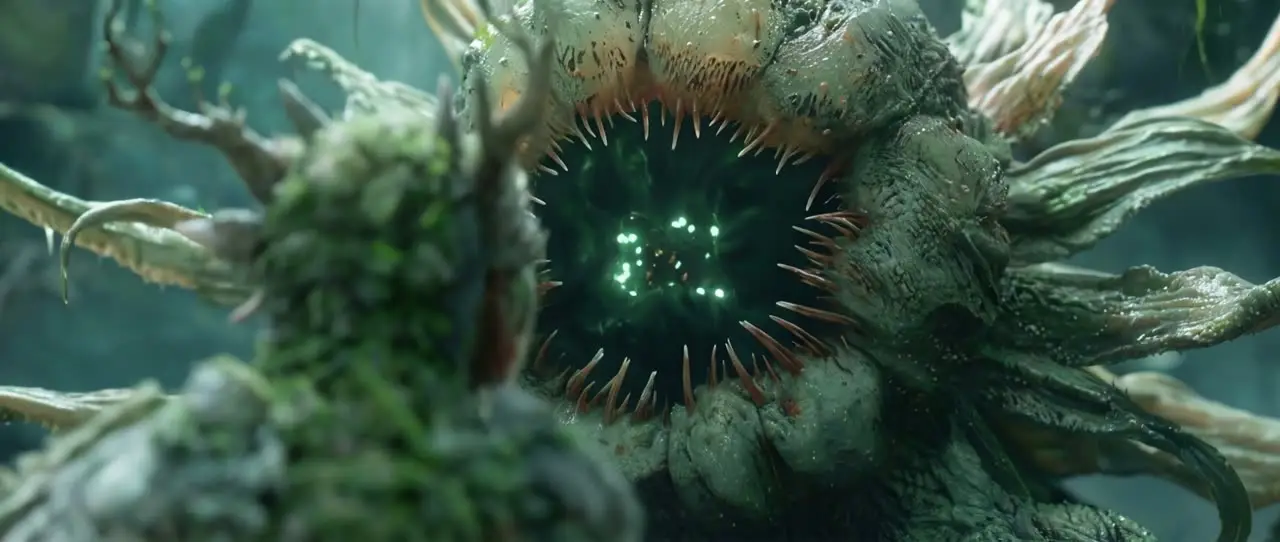 视频截图视频节点 24
互相看着对方,食人花的触角在空中蠕动,一种危险的气息。 说明:可以生成音效,不要生成音乐
小神兽在走路,后面有一个植物样子的藤曼触角在跟踪他,小神兽跳下树枝继续走出画,画面停留在触角身上,触角慢慢后退从地面滑走,画面紧张感 说明:可以生成音效,不要生成音乐
此处断裂,细节真实
The little divine beast broke free and ran away。 <instruction> **Role:** Cinematic Director & Storyboard Artist **Task:** Create a 3x3 "Cinematic Montage Grid" based on the input image. **Goal:** Depict a **progressive storyline** (Time t=0s to t=5s) while simultaneously using **diverse camera angles and focal lengths**. **Directive:** Do NOT just show the same moment from different angles. Do NOT just show a static camera with moving subjects. **YOU MUST combine "Time Progression" with "Camera Movement".** **The Narrative Arc (3x3 Grid Structure):** **Row 1: The Setup (Time: Start | Wide & Dynamic)** * **Panel 1 (Extreme Long Shot):** Establishing the scene. The subject is entering the space or starting the action. * **Panel 2 (Long Shot / Low Angle):** The subject moves closer. Camera looks up to emphasize presence. Action is initiating. * **Panel 3 (Full Shot / Tracking):** Subject is in full motion. Camera tracks alongside them. **Row 2: The Conflict/Action (Time: Middle | Mid-Range & Interaction)** * **Panel 4 (Medium Shot):** The core action occurs (e.g., interacting with an object, talking, fighting). Focus on body language. * **Panel 5 (Over-The-Shoulder / POV):** A perspective shift. Seeing what the subject sees or facing the subject directly during the peak of action. * **Panel 6 (Medium Close-Up):** The action intensifies. Camera pushes in. Focus shifts to the upper body/reaction. **Row 3: The Resolution/Detail (Time: End | Close & Intimate)** * **Panel 7 (Close-Up):** Tight focus on the face or main focal point. Capturing the emotional reaction or effort. * **Panel 8 (Extreme Close-Up / Macro):** A specific detail of the action (e.g., a hand gripping, an eye widening, a foot landing). * **Panel 9 (High Angle / Top Down):** The aftermath or final state. Looking down at the subject as the action concludes. **Visual Consistency Rules:** 1. **Subject Identity:** The character's face, costume, and props must remain identical across all shots. 2. **Lighting Continuity:** The direction and mood of the light (e.g., sunset, neon, diffuse) must match the original image exactly. 3. **Montage Flow:** The sequence should feel like a professionally edited movie trailer where cuts are fast but logically connected. </instruction> <output_format> A photorealistic 3x3 storyboard grid. - **Top Row:** Wide shots, movement starting. - **Middle Row:** Medium shots, action peaking. - **Bottom Row:** Close-ups/Angles, action concluding. High contrast, cinematic composition, distinct depth of field for each shot type. </output_format>
<instruction> **Role:** Cinematic Director & Storyboard Artist **Task:** Create a 3x3 "Cinematic Montage Grid" based on the input image. **Goal:** Depict a **progressive storyline** (Time t=0s to t=5s) while simultaneously using **diverse camera angles and focal lengths**. **Directive:** Do NOT just show the same moment from different angles. Do NOT just show a static camera with moving subjects. **YOU MUST combine "Time Progression" with "Camera Movement".** **The Narrative Arc (3x3 Grid Structure):** **Row 1: The Setup (Time: Start | Wide & Dynamic)** * **Panel 1 (Extreme Long Shot):** Establishing the scene. The subject is entering the space or starting the action. * **Panel 2 (Long Shot / Low Angle):** The subject moves closer. Camera looks up to emphasize presence. Action is initiating. * **Panel 3 (Full Shot / Tracking):** Subject is in full motion. Camera tracks alongside them. **Row 2: The Conflict/Action (Time: Middle | Mid-Range & Interaction)** * **Panel 4 (Medium Shot):** The core action occurs (e.g., interacting with an object, talking, fighting). Focus on body language. * **Panel 5 (Over-The-Shoulder / POV):** A perspective shift. Seeing what the subject sees or facing the subject directly during the peak of action. * **Panel 6 (Medium Close-Up):** The action intensifies. Camera pushes in. Focus shifts to the upper body/reaction. **Row 3: The Resolution/Detail (Time: End | Close & Intimate)** * **Panel 7 (Close-Up):** Tight focus on the face or main focal point. Capturing the emotional reaction or effort. * **Panel 8 (Extreme Close-Up / Macro):** A specific detail of the action (e.g., a hand gripping, an eye widening, a foot landing). * **Panel 9 (High Angle / Top Down):** The aftermath or final state. Looking down at the subject as the action concludes. **Visual Consistency Rules:** 1. **Subject Identity:** The character's face, costume, and props must remain identical across all shots. 2. **Lighting Continuity:** The direction and mood of the light (e.g., sunset, neon, diffuse) must match the original image exactly. 3. **Montage Flow:** The sequence should feel like a professionally edited movie trailer where cuts are fast but logically connected. </instruction> <output_format> A photorealistic 3x3 storyboard grid. - **Top Row:** Wide shots, movement starting. - **Middle Row:** Medium shots, action peaking. - **Bottom Row:** Close-ups/Angles, action concluding. High contrast, cinematic composition, distinct depth of field for each shot type. </output_format>
只提取九宫格分镜中第2行第1列的分镜单图.,保持原图不要变动
小神兽用力挣扎,用脚狠狠的钩住藤曼,然后用力想要把藤曼用爪子夹断,夹断以后食人花快速松开触角,小神兽掉了下去跑走,画面运动风格:紧张感,运动感。 说明:可以生成音效,不要生成音乐
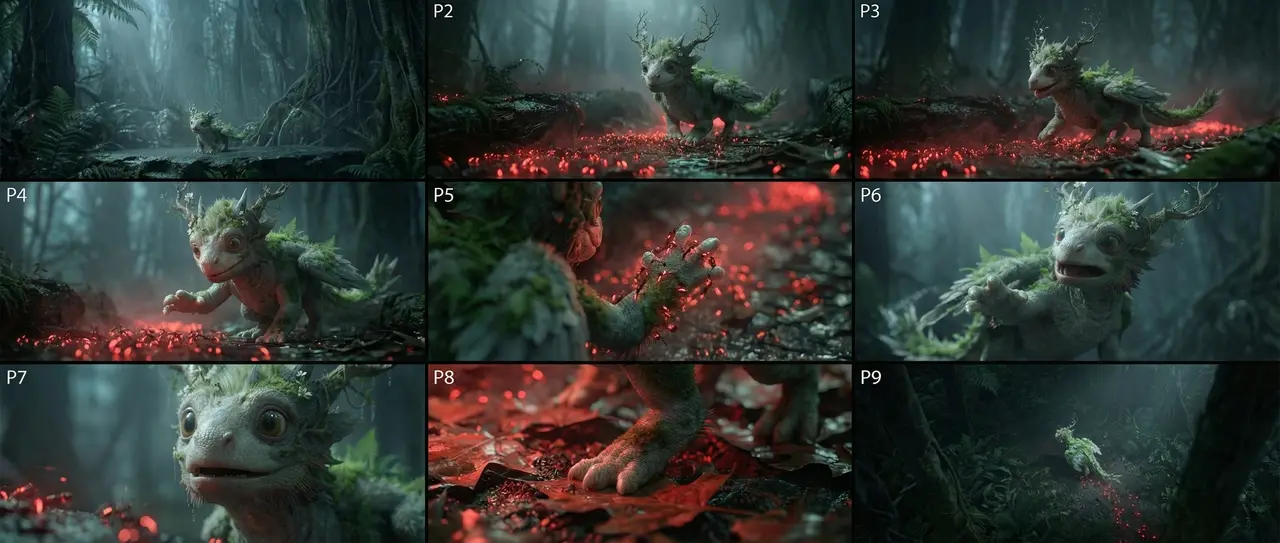 图片节点 13
The little mystical creature was walking in the rainforest millions of years ago when it discovered ants glowing red. It wanted to play with them, but then the ant colony started attacking it, so it ran away. <instruction> **Role:** Cinematic Director & Storyboard Artist **Task:** Create a 3x3 "Cinematic Montage Grid" based on the input image. **Goal:** Depict a **progressive storyline** (Time t=0s to t=5s) while simultaneously using **diverse camera angles and focal lengths**. **Directive:** Do NOT just show the same moment from different angles. Do NOT just show a static camera with moving subjects. **YOU MUST combine "Time Progression" with "Camera Movement".** **The Narrative Arc (3x3 Grid Structure):** **Row 1: The Setup (Time: Start | Wide & Dynamic)** * **Panel 1 (Extreme Long Shot):** Establishing the scene. The subject is entering the space or starting the action. * **Panel 2 (Long Shot / Low Angle):** The subject moves closer. Camera looks up to emphasize presence. Action is initiating. * **Panel 3 (Full Shot / Tracking):** Subject is in full motion. Camera tracks alongside them. **Row 2: The Conflict/Action (Time: Middle | Mid-Range & Interaction)** * **Panel 4 (Medium Shot):** The core action occurs (e.g., interacting with an object, talking, fighting). Focus on body language. * **Panel 5 (Over-The-Shoulder / POV):** A perspective shift. Seeing what the subject sees or facing the subject directly during the peak of action. * **Panel 6 (Medium Close-Up):** The action intensifies. Camera pushes in. Focus shifts to the upper body/reaction. **Row 3: The Resolution/Detail (Time: End | Close & Intimate)** * **Panel 7 (Close-Up):** Tight focus on the face or main focal point. Capturing the emotional reaction or effort. * **Panel 8 (Extreme Close-Up / Macro):** A specific detail of the action (e.g., a hand gripping, an eye widening, a foot landing). * **Panel 9 (High Angle / Top Down):** The aftermath or final state. Looking down at the subject as the action concludes. **Visual Consistency Rules:** 1. **Subject Identity:** The character's face, costume, and props must remain identical across all shots. 2. **Lighting Continuity:** The direction and mood of the light (e.g., sunset, neon, diffuse) must match the original image exactly. 3. **Montage Flow:** The sequence should feel like a professionally edited movie trailer where cuts are fast but logically connected. </instruction> <output_format> A photorealistic 3x3 storyboard grid. - **Top Row:** Wide shots, movement starting. - **Middle Row:** Medium shots, action peaking. - **Bottom Row:** Close-ups/Angles, action concluding. High contrast, cinematic composition, distinct depth of field for each shot type. </output_format>
绿色荧光改为红色荧光
There are some red glowing ants on the little mythical creature, running through the jungle. <instruction> **Role:** Cinematic Director & Storyboard Artist **Task:** Create a 3x3 "Cinematic Montage Grid" based on the input image. **Goal:** Depict a **progressive storyline** (Time t=0s to t=5s) while simultaneously using **diverse camera angles and focal lengths**. **Directive:** Do NOT just show the same moment from different angles. Do NOT just show a static camera with moving subjects. **YOU MUST combine "Time Progression" with "Camera Movement".** **The Narrative Arc (3x3 Grid Structure):** **Row 1: The Setup (Time: Start | Wide & Dynamic)** * **Panel 1 (Extreme Long Shot):** Establishing the scene. The subject is entering the space or starting the action. * **Panel 2 (Long Shot / Low Angle):** The subject moves closer. Camera looks up to emphasize presence. Action is initiating. * **Panel 3 (Full Shot / Tracking):** Subject is in full motion. Camera tracks alongside them. **Row 2: The Conflict/Action (Time: Middle | Mid-Range & Interaction)** * **Panel 4 (Medium Shot):** The core action occurs (e.g., interacting with an object, talking, fighting). Focus on body language. * **Panel 5 (Over-The-Shoulder / POV):** A perspective shift. Seeing what the subject sees or facing the subject directly during the peak of action. * **Panel 6 (Medium Close-Up):** The action intensifies. Camera pushes in. Focus shifts to the upper body/reaction. **Row 3: The Resolution/Detail (Time: End | Close & Intimate)** * **Panel 7 (Close-Up):** Tight focus on the face or main focal point. Capturing the emotional reaction or effort. * **Panel 8 (Extreme Close-Up / Macro):** A specific detail of the action (e.g., a hand gripping, an eye widening, a foot landing). * **Panel 9 (High Angle / Top Down):** The aftermath or final state. Looking down at the subject as the action concludes. **Visual Consistency Rules:** 1. **Subject Identity:** The character's face, costume, and props must remain identical across all shots. 2. **Lighting Continuity:** The direction and mood of the light (e.g., sunset, neon, diffuse) must match the original image exactly. 3. **Montage Flow:** The sequence should feel like a professionally edited movie trailer where cuts are fast but logically connected. </instruction> <output_format> A photorealistic 3x3 storyboard grid. - **Top Row:** Wide shots, movement starting. - **Middle Row:** Medium shots, action peaking. - **Bottom Row:** Close-ups/Angles, action concluding. High contrast, cinematic composition, distinct depth of field for each shot type. </output_format>
图片转2K
提取CLOSE UO SHOT分镜单图,并去掉所有文本
为这个分镜,每一个单独的镜头添加英文注释
提取九宫格分镜中第2行第3列的分镜单图。
蚂蚁减小一些
提取九宫格分镜中第2行第3列的分镜单图.不要改变构图和内容
图一红色荧光蚂蚁往小神兽身上爬,攻击小神兽,小神兽很痛苦,边甩蚂蚁边往前跑,跑的很快。镜头运动背跟。紧张刺激感。 小神兽样子参考 图2 说明:可以生成音效,不要生成音乐 说明:可以生成音效,不要生成音乐
{{Portrait 1}} 红色荧光蚂蚁往小神兽身上爬,攻击小神兽,小神兽很痛苦,边甩蚂蚁边往前跑,镜头给观众一种又心疼又搞笑的感觉。镜头运动背跟拍晃动。 小神兽样子参考 {{Portrait 2}} 说明:可以生成音效,不要生成音乐
小神兽身上有很多红色荧光蚂蚁正在攻击小神兽
红色荧光蚂蚁往小神兽身上爬,攻击小神兽,小神兽很痛苦,疯狂甩掉身上的蚂蚁,但是根本甩不掉全部的蚂蚁,小神兽往前跑,边甩边跑,镜头给观众一种又心疼又搞笑的感觉。镜头运动自己发挥, 说明:可以生成音效,不要生成音乐
小神兽头上的蚂蚁减少
身上红色荧光蚂蚁蚁太多了,减少数量,分布不要那么均匀
提取九宫格分镜中第3行第3列的分镜单图。增加画面细节质感
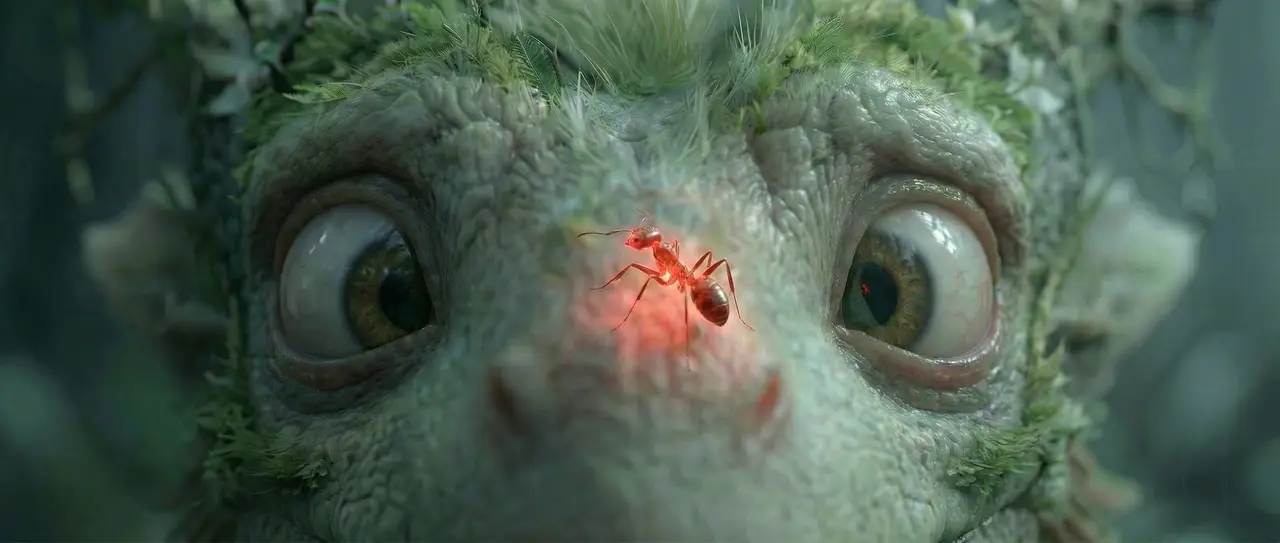
有一只蚂蚁爬到鼻子上,小神兽慢慢变成斗鸡眼(Cross-eyed )看着在鼻子上的蚂蚁。说明:可以生成音效,不要生成音乐
蚂蚁咬了鼻子一口,小神兽表情惊恐转为疼痛,眼神做一些变化,剧情搞笑。 说明:可以生成音效,不要生成音乐
{{Image 1}} 蚂蚁在小一点。 {{Image 1}} 红色荧光效果参考 {{Image 2}} 更亮一点,范围更大一点
蚂蚁整体再小一点,红色荧光感在亮一点,蚂蚁头部也要发点光
小神兽好奇的看着身上的蚂蚁,有一只蚂蚁爬到了它的鼻子上,小神兽慢慢放下手臂,看着蚂蚁变成了斗鸡眼(Cross-eyed ),说明:可以生成音效,不要生成音乐
提取九宫格分镜中第2行第3列的分镜单图.保持原图不要变动
提取九宫格分镜中第3行第1列的分镜单图.
画面后景虚焦红点去掉
小神兽好奇的看着身上的蚂蚁,有一只蚂蚁爬到了它的鼻子上(蚂蚁运动过程中比例不要变动),小神兽放下手臂,看着蚂蚁变成了斗鸡眼(Cross-eyed ),说明:可以生成音效,不要生成音乐
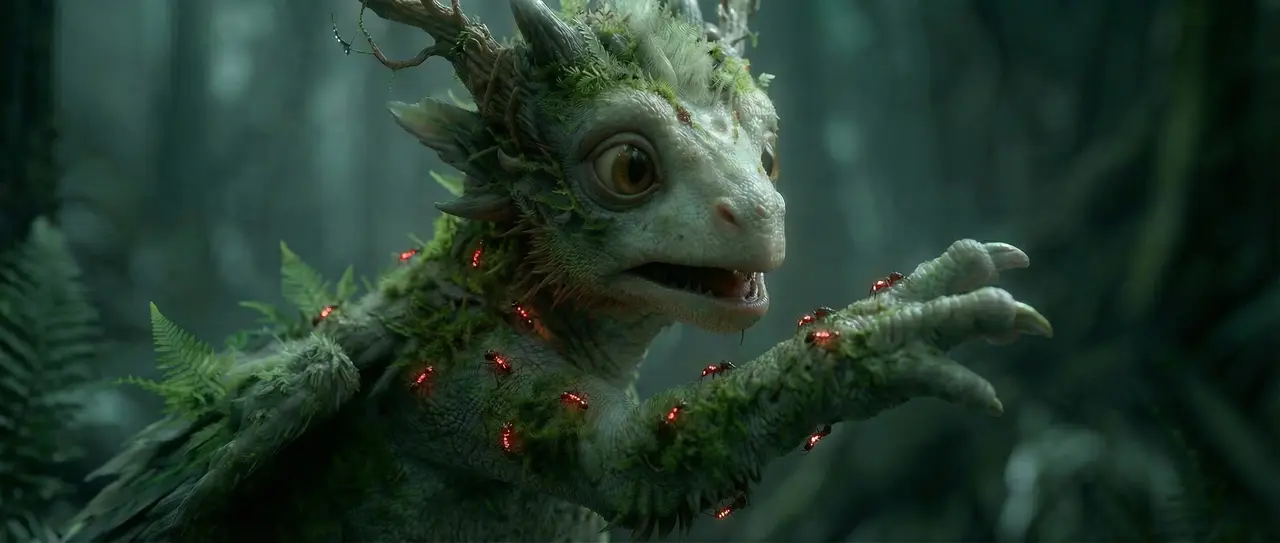 图片节点 7
蚂蚁整体在小一点
头上蚂蚁只留一只
红色荧光蚂蚁头上只留一个,身上手臂上多一些,左上角英文文本去掉。
头上的蚂蚁减少只留一个。红色荧光蚂蚁整体比例减小,效果不变,
去掉遮罩部分的红色荧光蚂蚁
蚂蚁比例减小
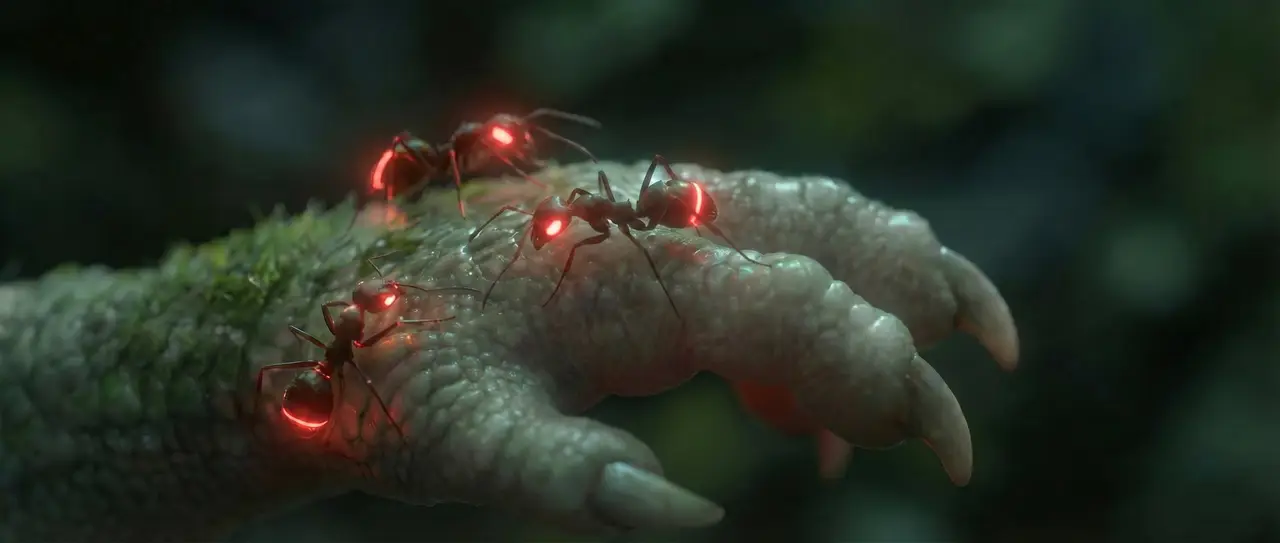
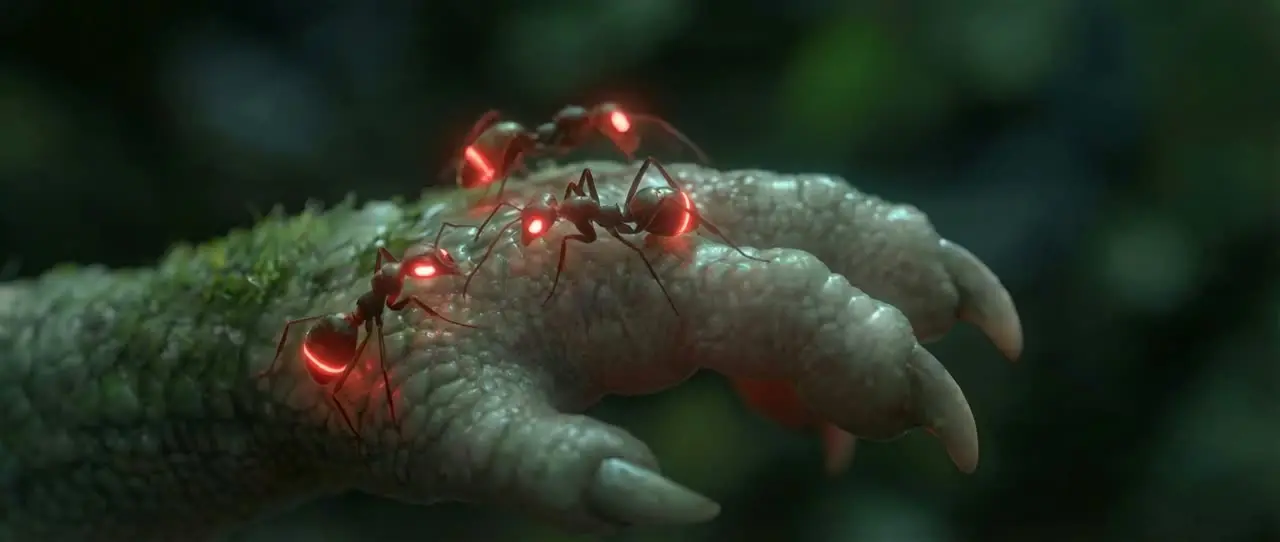
蚂蚁开始往画左慢慢爬。摄影机跟拍蚂蚁爬的过程。 可以生成音效,不要生成音乐。
红色荧光蚂蚁沿着手臂慢慢往里爬,镜头微跟
参考图片中的环境,生成一个相似环境
参考风格生成多场景
怪兽有大有小,一个家族在岩洞里
/
在岩洞里生活
提取九宫格分镜图中的第2行第2列的分镜单图
更换背景,在岩洞里正常生活景象
The little green mythical beast was originally one of them, but because of its strange appearance it was ostracized and driven out. <instruction> **Role:** Cinematic Director & Storyboard Artist **Task:** Create a 3x3 "Cinematic Montage Grid" based on the input image. **Goal:** Depict a **progressive storyline** (Time t=0s to t=5s) while simultaneously using **diverse camera angles and focal lengths**. **Directive:** Do NOT just show the same moment from different angles. Do NOT just show a static camera with moving subjects. **YOU MUST combine "Time Progression" with "Camera Movement".** **The Narrative Arc (3x3 Grid Structure):** **Row 1: The Setup (Time: Start | Wide & Dynamic)** * **Panel 1 (Extreme Long Shot):** Establishing the scene. The subject is entering the space or starting the action. * **Panel 2 (Long Shot / Low Angle):** The subject moves closer. Camera looks up to emphasize presence. Action is initiating. * **Panel 3 (Full Shot / Tracking):** Subject is in full motion. Camera tracks alongside them. **Row 2: The Conflict/Action (Time: Middle | Mid-Range & Interaction)** * **Panel 4 (Medium Shot):** The core action occurs (e.g., interacting with an object, talking, fighting). Focus on body language. * **Panel 5 (Over-The-Shoulder / POV):** A perspective shift. Seeing what the subject sees or facing the subject directly during the peak of action. * **Panel 6 (Medium Close-Up):** The action intensifies. Camera pushes in. Focus shifts to the upper body/reaction. **Row 3: The Resolution/Detail (Time: End | Close & Intimate)** * **Panel 7 (Close-Up):** Tight focus on the face or main focal point. Capturing the emotional reaction or effort. * **Panel 8 (Extreme Close-Up / Macro):** A specific detail of the action (e.g., a hand gripping, an eye widening, a foot landing). * **Panel 9 (High Angle / Top Down):** The aftermath or final state. Looking down at the subject as the action concludes. **Visual Consistency Rules:** 1. **Subject Identity:** The character's face, costume, and props must remain identical across all shots. 2. **Lighting Continuity:** The direction and mood of the light (e.g., sunset, neon, diffuse) must match the original image exactly. 3. **Montage Flow:** The sequence should feel like a professionally edited movie trailer where cuts are fast but logically connected. </instruction> <output_format> A photorealistic 3x3 storyboard grid. - **Top Row:** Wide shots, movement starting. - **Middle Row:** Medium shots, action peaking. - **Bottom Row:** Close-ups/Angles, action concluding. High contrast, cinematic composition, distinct depth of field for each shot type. </output_format>
大龙在对小龙说什么,小龙很难过,发出独属于他们的语言 说明:可以生成音效,不要生成音乐。不要有人类语言
提取九宫格分镜图中的第2行第1列的分镜单图
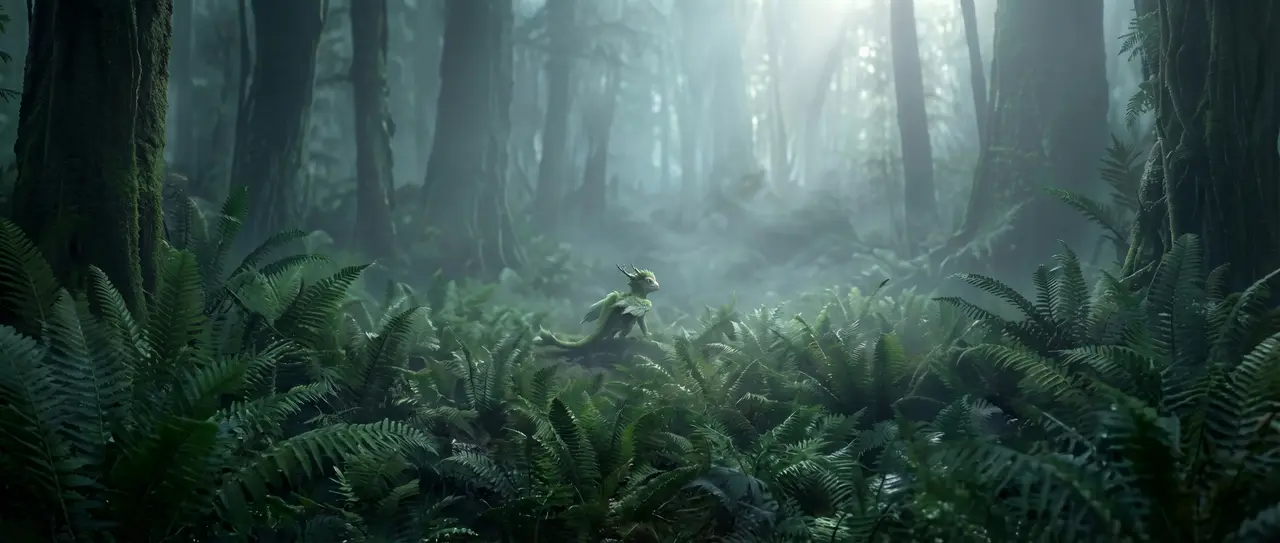 图片节点 19
提取九宫格分镜图中的第1行第1列的分镜单图,去掉左上角的文本
绿色小神兽本是家族的一员,但长相另类,被家族驱逐,小神兽很难过,被逼无奈离开。多镜头生成,电影感运镜,情绪表达。 说明:可以生成音效,不要生成音乐,不要有具体台词配音。
去掉绿色龙后边的两个龙
提取九宫格分镜图中的第3行第2列的分镜单图
去掉下雨效果
小神兽睡觉 说明:可以生成音效,不要生成音乐
提取九宫格分镜图中的第2行第3列的分镜单图
The little magical beast drank water, foraged for food, and ran around playing in the rainforest billions of years ago <instruction> **Role:** Cinematic Director & Storyboard Artist **Task:** Create a 3x3 "Cinematic Montage Grid" based on the input image. **Goal:** Depict a **progressive storyline** (Time t=0s to t=5s) while simultaneously using **diverse camera angles and focal lengths**. **Directive:** Do NOT just show the same moment from different angles. Do NOT just show a static camera with moving subjects. **YOU MUST combine "Time Progression" with "Camera Movement".** **The Narrative Arc (3x3 Grid Structure):** **Row 1: The Setup (Time: Start | Wide & Dynamic)** * **Panel 1 (Extreme Long Shot):** Establishing the scene. The subject is entering the space or starting the action. * **Panel 2 (Long Shot / Low Angle):** The subject moves closer. Camera looks up to emphasize presence. Action is initiating. * **Panel 3 (Full Shot / Tracking):** Subject is in full motion. Camera tracks alongside them. **Row 2: The Conflict/Action (Time: Middle | Mid-Range & Interaction)** * **Panel 4 (Medium Shot):** The core action occurs (e.g., interacting with an object, talking, fighting). Focus on body language. * **Panel 5 (Over-The-Shoulder / POV):** A perspective shift. Seeing what the subject sees or facing the subject directly during the peak of action. * **Panel 6 (Medium Close-Up):** The action intensifies. Camera pushes in. Focus shifts to the upper body/reaction. **Row 3: The Resolution/Detail (Time: End | Close & Intimate)** * **Panel 7 (Close-Up):** Tight focus on the face or main focal point. Capturing the emotional reaction or effort. * **Panel 8 (Extreme Close-Up / Macro):** A specific detail of the action (e.g., a hand gripping, an eye widening, a foot landing). * **Panel 9 (High Angle / Top Down):** The aftermath or final state. Looking down at the subject as the action concludes. **Visual Consistency Rules:** 1. **Subject Identity:** The character's face, costume, and props must remain identical across all shots. 2. **Lighting Continuity:** The direction and mood of the light (e.g., sunset, neon, diffuse) must match the original image exactly. 3. **Montage Flow:** The sequence should feel like a professionally edited movie trailer where cuts are fast but logically connected. </instruction> <output_format> A photorealistic 3x3 storyboard grid. - **Top Row:** Wide shots, movement starting. - **Middle Row:** Medium shots, action peaking. - **Bottom Row:** Close-ups/Angles, action concluding. High contrast, cinematic composition, distinct depth of field for each shot type. </output_format>
去掉身上的水
The little mythical beast walked at night and slept in the rainforest billions of years ago.<instruction> **Role:** Cinematic Director & Storyboard Artist **Task:** Create a 3x3 "Cinematic Montage Grid" based on the input image. **Goal:** Depict a **progressive storyline** (Time t=0s to t=5s) while simultaneously using **diverse camera angles and focal lengths**. **Directive:** Do NOT just show the same moment from different angles. Do NOT just show a static camera with moving subjects. **YOU MUST combine "Time Progression" with "Camera Movement".** **The Narrative Arc (3x3 Grid Structure):** **Row 1: The Setup (Time: Start | Wide & Dynamic)** * **Panel 1 (Extreme Long Shot):** Establishing the scene. The subject is entering the space or starting the action. * **Panel 2 (Long Shot / Low Angle):** The subject moves closer. Camera looks up to emphasize presence. Action is initiating. * **Panel 3 (Full Shot / Tracking):** Subject is in full motion. Camera tracks alongside them. **Row 2: The Conflict/Action (Time: Middle | Mid-Range & Interaction)** * **Panel 4 (Medium Shot):** The core action occurs (e.g., interacting with an object, talking, fighting). Focus on body language. * **Panel 5 (Over-The-Shoulder / POV):** A perspective shift. Seeing what the subject sees or facing the subject directly during the peak of action. * **Panel 6 (Medium Close-Up):** The action intensifies. Camera pushes in. Focus shifts to the upper body/reaction. **Row 3: The Resolution/Detail (Time: End | Close & Intimate)** * **Panel 7 (Close-Up):** Tight focus on the face or main focal point. Capturing the emotional reaction or effort. * **Panel 8 (Extreme Close-Up / Macro):** A specific detail of the action (e.g., a hand gripping, an eye widening, a foot landing). * **Panel 9 (High Angle / Top Down):** The aftermath or final state. Looking down at the subject as the action concludes. **Visual Consistency Rules:** 1. **Subject Identity:** The character's face, costume, and props must remain identical across all shots. 2. **Lighting Continuity:** The direction and mood of the light (e.g., sunset, neon, diffuse) must match the original image exactly. 3. **Montage Flow:** The sequence should feel like a professionally edited movie trailer where cuts are fast but logically connected. </instruction> <output_format> A photorealistic 3x3 storyboard grid. - **Top Row:** Wide shots, movement starting. - **Middle Row:** Medium shots, action peaking. - **Bottom Row:** Close-ups/Angles, action concluding. High contrast, cinematic composition, distinct depth of field for each shot type. </output_format>
大龙表情凝重,在对小龙说什么,发出独属于他们的语言。 说明:可以生成音效,不要生成音乐。不要有人类语言
提取九宫格分镜图中的第1行第3列的分镜单图
提取九宫格分镜图中的第3行第1列的分镜单图
取九宫格分镜图中的第3行第3列的分镜单图
小龙兽在玩叶子。 说明:可以生成音效,不要生成音乐。
提取九宫格分镜图中的第1行第2列的分镜单图
提取九宫格分镜图中的第1行第1列的分镜单图,去掉左上角的文本
夜间环境
提取九宫格分镜中的第3行第1列的分镜单图
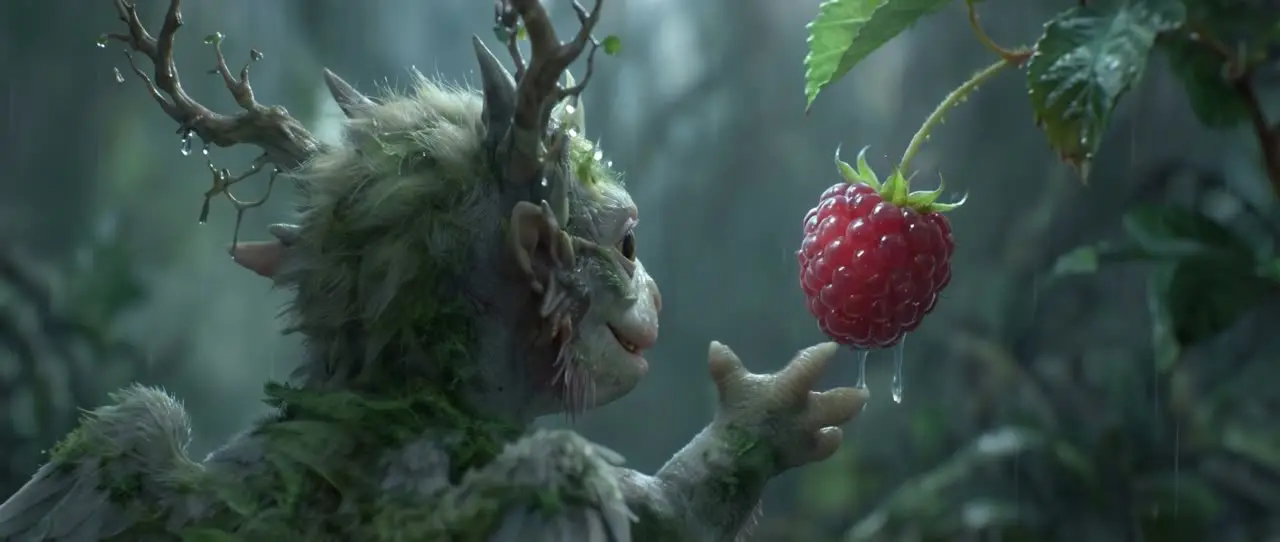 视频截图视频节点 16
小龙兽摘果子往嘴里塞 说明:可以生成音效,不要生成音乐
大龙表情凝重,在对小龙说什么,发出独属于他们的语言。 说明:可以生成音效,不要生成音乐。不要有人类语言
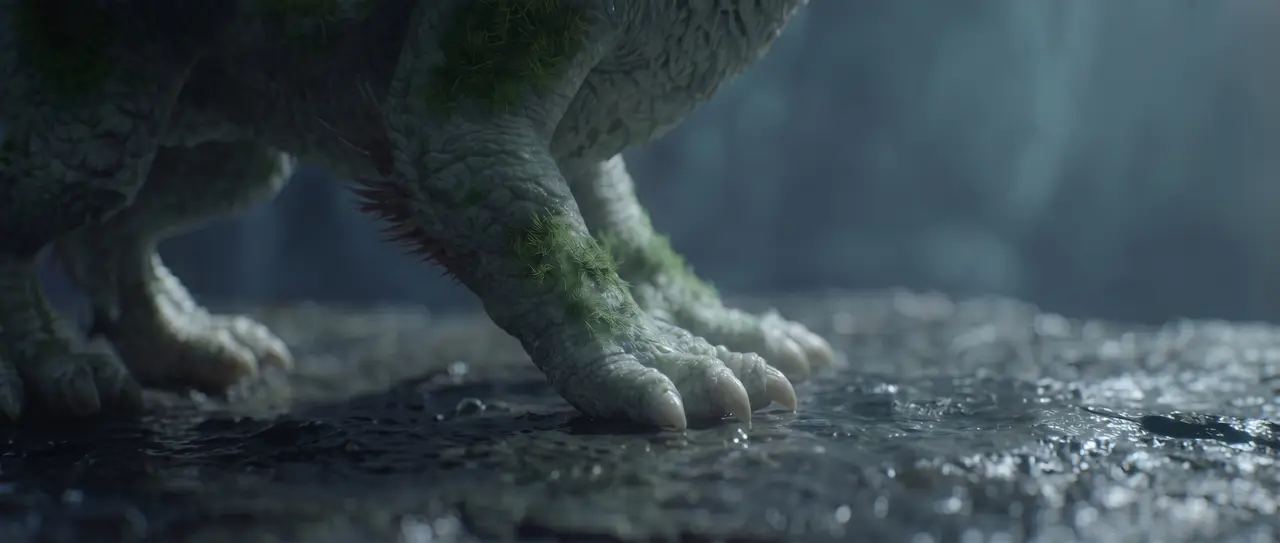 图片节点 18
去掉水滴
大龙表情凝重,在对小龙说什么,发出奇怪的声音。 说明:可以生成音效,不要生成音乐。不要有人类语言
小龙兽在河流里玩耍 说明:可以生成音效,不要生成音乐。
小龙兽甩掉身上的水 说明:可以生成音效,不要生成音乐
小龙兽在玩叶子。叶子需要符合物理规律的飘动。 说明:可以生成音效,不要生成音乐。
小龙兽再吃水果 说明:可以生成音效,不要生成音乐
小神兽在睡觉 说明:可以生成音效,不要生成音乐
小神兽叼起一个蘑菇,用蘑菇照明,继续走路。多镜头转全景。 说明:可以生成音效,不要生成音乐
小神兽往前走。 说明:可以生成音效,不要生成音乐
小神兽脚步迟疑的往前走,摄影机背跟。 说明:可以生成音效,不要生成音乐
小神兽喝水 说明:可以生成音效,不要生成音乐
小龙兽用发光的蘑菇照明,在走夜路。 说明:可以生成音效,不要生成音乐
小脚比较紧张
小脚比较紧张,,不要有太大动作。 说明:可以生成音效,不要生成音乐。
去掉绿色生物
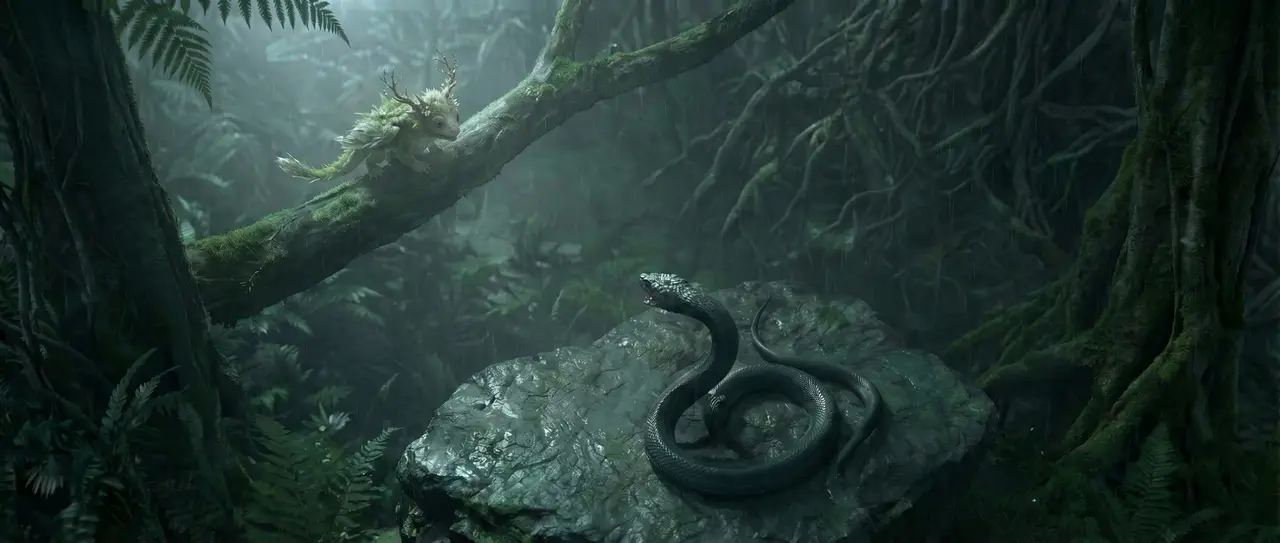
黑蛇加到图 {{Image 1}} 前景中,蛇是背身
小神兽背着走,后面有条蛇再跟着,小神兽没有发现 说明:可以生成音效,不要生成音乐
A movie trailer <instruction> **Role:** Cinematic Director & Storyboard Artist **Task:** Create a 3x3 "Cinematic Montage Grid" based on the input image. **Goal:** Depict a **progressive storyline** (Time t=0s to t=5s) while simultaneously using **diverse camera angles and focal lengths**. **Directive:** Do NOT just show the same moment from different angles. Do NOT just show a static camera with moving subjects. **YOU MUST combine "Time Progression" with "Camera Movement".** **The Narrative Arc (3x3 Grid Structure):** **Row 1: The Setup (Time: Start | Wide & Dynamic)** * **Panel 1 (Extreme Long Shot):** Establishing the scene. The subject is entering the space or starting the action. * **Panel 2 (Long Shot / Low Angle):** The subject moves closer. Camera looks up to emphasize presence. Action is initiating. * **Panel 3 (Full Shot / Tracking):** Subject is in full motion. Camera tracks alongside them. **Row 2: The Conflict/Action (Time: Middle | Mid-Range & Interaction)** * **Panel 4 (Medium Shot):** The core action occurs (e.g., interacting with an object, talking, fighting). Focus on body language. * **Panel 5 (Over-The-Shoulder / POV):** A perspective shift. Seeing what the subject sees or facing the subject directly during the peak of action. * **Panel 6 (Medium Close-Up):** The action intensifies. Camera pushes in. Focus shifts to the upper body/reaction. **Row 3: The Resolution/Detail (Time: End | Close & Intimate)** * **Panel 7 (Close-Up):** Tight focus on the face or main focal point. Capturing the emotional reaction or effort. * **Panel 8 (Extreme Close-Up / Macro):** A specific detail of the action (e.g., a hand gripping, an eye widening, a foot landing). * **Panel 9 (High Angle / Top Down):** The aftermath or final state. Looking down at the subject as the action concludes. **Visual Consistency Rules:** 1. **Subject Identity:** The character's face, costume, and props must remain identical across all shots. 2. **Lighting Continuity:** The direction and mood of the light (e.g., sunset, neon, diffuse) must match the original image exactly. 3. **Montage Flow:** The sequence should feel like a professionally edited movie trailer where cuts are fast but logically connected. </instruction> <output_format> A photorealistic 3x3 storyboard grid. - **Top Row:** Wide shots, movement starting. - **Middle Row:** Medium shots, action peaking. - **Bottom Row:** Close-ups/Angles, action concluding. High contrast, cinematic composition, distinct depth of field for each shot type. </output_format>
小神兽在喝水,喝完水走了之后,一只黑蛇出现在画面里,然后跟踪小神兽。 多机位镜头,画面紧张感,危险气息运镜。说明:可以生成音效,不要生成音乐
提取九宫格分镜中第2行第1列的分镜单图,增加画面细节质感,增加雾气
蛇加到小神兽的后方
画幅变成21:9,提升画面细节,优化画面穿帮。
转2K
一个亿万年前的原始雨林,雨林里有原始生物。俯拍视角大全景。
(低语、缓慢进入) 在绿色吞噬时间的尽头, 一个被遗忘的名字,开始呼吸。 (稍停顿) 它叫咕噜绿。 生来不同,便被世界推开。 (语气带一点天真与危险) 它相信每一片叶子的低语, 相信每一双陌生的眼睛。 可雨林从不说谎—— 它只是,让你自己发现代价。 (节奏变紧,低沉有力) 跌倒,爬起, 被伤,再信。 它的手掌很小, 攥着的勇气,却比树根还长。 (音乐推高前,留白半秒) 这是一场关于“活着”的冒险。 无关原谅,只关乎—— 走下去。 (最后一句压低,像在耳边) 咕噜绿。 你终会听见,自己的名字
一个史诗级电影预告片的开头,多角度镜头。 说明:可以生成音效,不要生成音乐
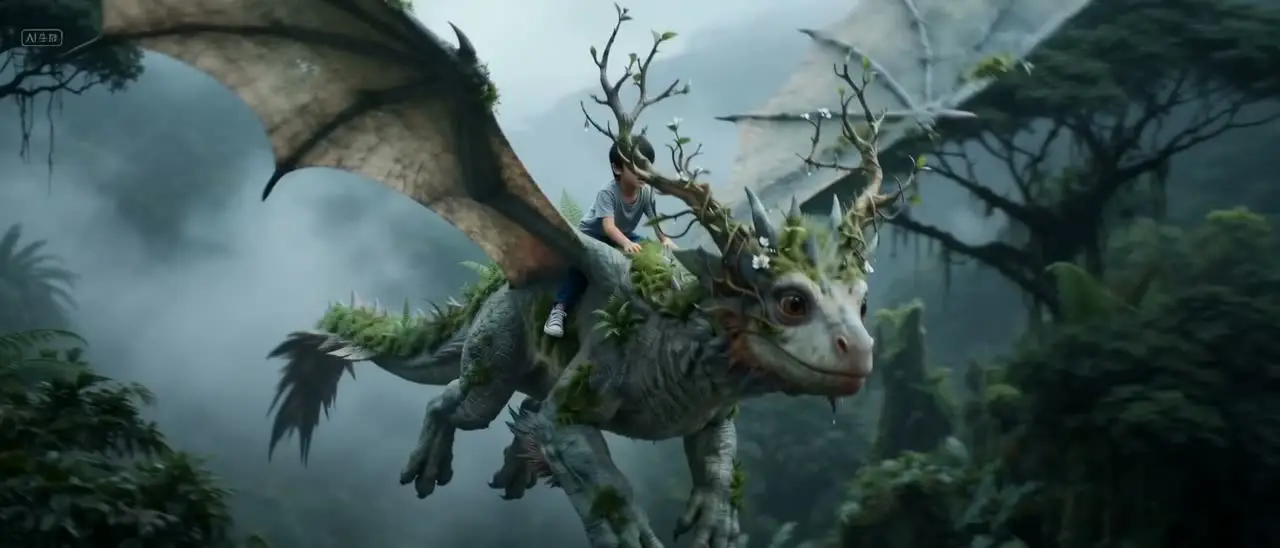 视频截图视频节点 6
图一中的小男孩骑着图二中的神兽飞行在图三中的四川九寨沟的雨林中。 说明:可以生成音效,不要生成音乐
一个史诗级电影预告片的开头,多角度镜头。 说明:可以生成音效,不要生成音乐
The boy and the little dragon beast are playing together at home and school <instruction> **Role:** Cinematic Director & Storyboard Artist **Task:** Create a 3x3 "Cinematic Montage Grid" based on the input image. **Goal:** Depict a **progressive storyline** (Time t=0s to t=5s) while simultaneously using **diverse camera angles and focal lengths**. **Directive:** Do NOT just show the same moment from different angles. Do NOT just show a static camera with moving subjects. **YOU MUST combine "Time Progression" with "Camera Movement".** **The Narrative Arc (3x3 Grid Structure):** **Row 1: The Setup (Time: Start | Wide & Dynamic)** * **Panel 1 (Extreme Long Shot):** Establishing the scene. The subject is entering the space or starting the action. * **Panel 2 (Long Shot / Low Angle):** The subject moves closer. Camera looks up to emphasize presence. Action is initiating. * **Panel 3 (Full Shot / Tracking):** Subject is in full motion. Camera tracks alongside them. **Row 2: The Conflict/Action (Time: Middle | Mid-Range & Interaction)** * **Panel 4 (Medium Shot):** The core action occurs (e.g., interacting with an object, talking, fighting). Focus on body language. * **Panel 5 (Over-The-Shoulder / POV):** A perspective shift. Seeing what the subject sees or facing the subject directly during the peak of action. * **Panel 6 (Medium Close-Up):** The action intensifies. Camera pushes in. Focus shifts to the upper body/reaction. **Row 3: The Resolution/Detail (Time: End | Close & Intimate)** * **Panel 7 (Close-Up):** Tight focus on the face or main focal point. Capturing the emotional reaction or effort. * **Panel 8 (Extreme Close-Up / Macro):** A specific detail of the action (e.g., a hand gripping, an eye widening, a foot landing). * **Panel 9 (High Angle / Top Down):** The aftermath or final state. Looking down at the subject as the action concludes. **Visual Consistency Rules:** 1. **Subject Identity:** The character's face, costume, and props must remain identical across all shots. 2. **Lighting Continuity:** The direction and mood of the light (e.g., sunset, neon, diffuse) must match the original image exactly. 3. **Montage Flow:** The sequence should feel like a professionally edited movie trailer where cuts are fast but logically connected. </instruction> <output_format> A photorealistic 3x3 storyboard grid. - **Top Row:** Wide shots, movement starting. - **Middle Row:** Medium shots, action peaking. - **Bottom Row:** Close-ups/Angles, action concluding. High contrast, cinematic composition, distinct depth of field for each shot type. </output_format>
一只母的小龙兽,颜色差别大一点,身上的花更多
小男孩长大了,干干净净,穿着一身新衣服
小男孩在学校教室里,伦勃朗式布光,电影感,史诗级的规模,8k分辨率,杰作
Based on the provided image of the boy, keep the facial features,五官, hairstyle (but washed clean) exactly the same. Remove all dirt, mud spots, rain-wet marks, and messy appearance. Change clothes to modern everyday boy's wear: for example, a solid or simple pattern short-sleeve T-shirt, casual shorts, sneakers or canvas shoes. The overall look is clean and fresh, with smooth skin and dry, tidy hair. Use a neutral soft background (e.g., light-colored wall or outdoor natural light), no rainforest or wet environment. Natural daylight illumination, 8K clarity, photorealistic quality. Do not change the face shape, eye expression, or age appearance.
Based on the current mythical beast image, generate its juvenile/young form. Keep all core features: horns are green plant structures (small branches, young leaves, tiny flowers), with ancient moss and ferns attached to suitable body parts. Overall smaller body size, more cub-like proportions (larger head relative to body, short and rounded limbs), curious and innocent eyes, softer skin/scales texture. Pose could be unsteady standing or lying down. Maintain a humid rainforest background, cinematic 8K photorealistic quality, soft diffused lighting. Do not change the species identity or the plant-horn nature.
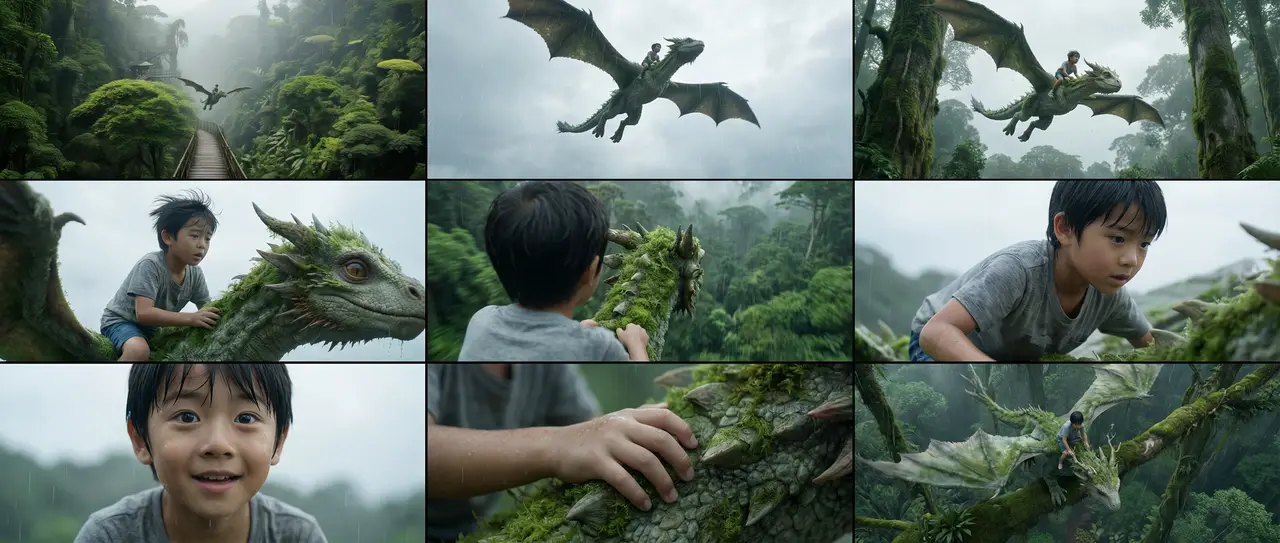 图片节点 8
The little boy in Figure 1 is flying on the mythical beast from Figure 2 in the rainforest of Jiuzhaigou, Sichuan, shown in Figure 3. <instruction> **Role:** Cinematic Director & Storyboard Artist **Task:** Create a 3x3 "Cinematic Montage Grid" based on the input image. **Goal:** Depict a **progressive storyline** (Time t=0s to t=5s) while simultaneously using **diverse camera angles and focal lengths**. **Directive:** Do NOT just show the same moment from different angles. Do NOT just show a static camera with moving subjects. **YOU MUST combine "Time Progression" with "Camera Movement".** **The Narrative Arc (3x3 Grid Structure):** **Row 1: The Setup (Time: Start | Wide & Dynamic)** * **Panel 1 (Extreme Long Shot):** Establishing the scene. The subject is entering the space or starting the action. * **Panel 2 (Long Shot / Low Angle):** The subject moves closer. Camera looks up to emphasize presence. Action is initiating. * **Panel 3 (Full Shot / Tracking):** Subject is in full motion. Camera tracks alongside them. **Row 2: The Conflict/Action (Time: Middle | Mid-Range & Interaction)** * **Panel 4 (Medium Shot):** The core action occurs (e.g., interacting with an object, talking, fighting). Focus on body language. * **Panel 5 (Over-The-Shoulder / POV):** A perspective shift. Seeing what the subject sees or facing the subject directly during the peak of action. * **Panel 6 (Medium Close-Up):** The action intensifies. Camera pushes in. Focus shifts to the upper body/reaction. **Row 3: The Resolution/Detail (Time: End | Close & Intimate)** * **Panel 7 (Close-Up):** Tight focus on the face or main focal point. Capturing the emotional reaction or effort. * **Panel 8 (Extreme Close-Up / Macro):** A specific detail of the action (e.g., a hand gripping, an eye widening, a foot landing). * **Panel 9 (High Angle / Top Down):** The aftermath or final state. Looking down at the subject as the action concludes. **Visual Consistency Rules:** 1. **Subject Identity:** The character's face, costume, and props must remain identical across all shots. 2. **Lighting Continuity:** The direction and mood of the light (e.g., sunset, neon, diffuse) must match the original image exactly. 3. **Montage Flow:** The sequence should feel like a professionally edited movie trailer where cuts are fast but logically connected. </instruction> <output_format> A photorealistic 3x3 storyboard grid. - **Top Row:** Wide shots, movement starting. - **Middle Row:** Medium shots, action peaking. - **Bottom Row:** Close-ups/Angles, action concluding. High contrast, cinematic composition, distinct depth of field for each shot type. </output_format>
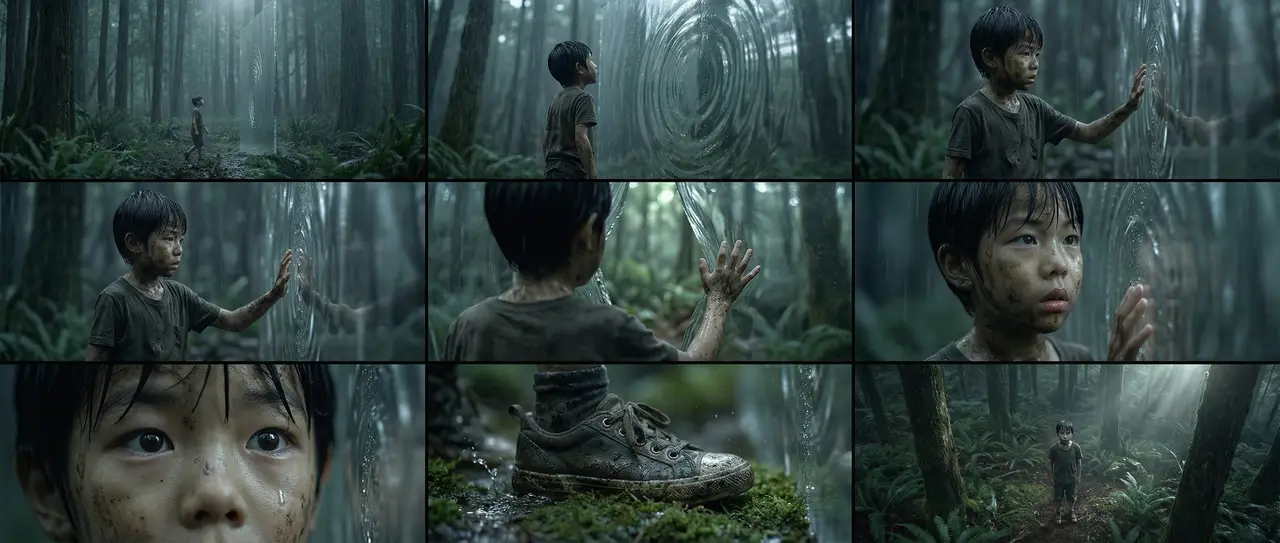
The boy got lost in the forest and accidentally passed through a mysterious barrier, arriving in a rainforest from hundreds of millions of years ago. <instruction> **Role:** Cinematic Director & Storyboard Artist **Task:** Create a 3x3 "Cinematic Montage Grid" based on the input image. **Goal:** Depict a **progressive storyline** (Time t=0s to t=5s) while simultaneously using **diverse camera angles and focal lengths**. **Directive:** Do NOT just show the same moment from different angles. Do NOT just show a static camera with moving subjects. **YOU MUST combine "Time Progression" with "Camera Movement".** **The Narrative Arc (3x3 Grid Structure):** **Row 1: The Setup (Time: Start | Wide & Dynamic)** * **Panel 1 (Extreme Long Shot):** Establishing the scene. The subject is entering the space or starting the action. * **Panel 2 (Long Shot / Low Angle):** The subject moves closer. Camera looks up to emphasize presence. Action is initiating. * **Panel 3 (Full Shot / Tracking):** Subject is in full motion. Camera tracks alongside them. **Row 2: The Conflict/Action (Time: Middle | Mid-Range & Interaction)** * **Panel 4 (Medium Shot):** The core action occurs (e.g., interacting with an object, talking, fighting). Focus on body language. * **Panel 5 (Over-The-Shoulder / POV):** A perspective shift. Seeing what the subject sees or facing the subject directly during the peak of action. * **Panel 6 (Medium Close-Up):** The action intensifies. Camera pushes in. Focus shifts to the upper body/reaction. **Row 3: The Resolution/Detail (Time: End | Close & Intimate)** * **Panel 7 (Close-Up):** Tight focus on the face or main focal point. Capturing the emotional reaction or effort. * **Panel 8 (Extreme Close-Up / Macro):** A specific detail of the action (e.g., a hand gripping, an eye widening, a foot landing). * **Panel 9 (High Angle / Top Down):** The aftermath or final state. Looking down at the subject as the action concludes. **Visual Consistency Rules:** 1. **Subject Identity:** The character's face, costume, and props must remain identical across all shots. 2. **Lighting Continuity:** The direction and mood of the light (e.g., sunset, neon, diffuse) must match the original image exactly. 3. **Montage Flow:** The sequence should feel like a professionally edited movie trailer where cuts are fast but logically connected. </instruction> <output_format> A photorealistic 3x3 storyboard grid. - **Top Row:** Wide shots, movement starting. - **Middle Row:** Medium shots, action peaking. - **Bottom Row:** Close-ups/Angles, action concluding. High contrast, cinematic composition, distinct depth of field for each shot type. </output_format>
The boy discovered a barrier in the forest. Out of curiosity, he touched it, the barrier opened, and the boy went in. <instruction> **Role:** Cinematic Director & Storyboard Artist **Task:** Create a 3x3 "Cinematic Montage Grid" based on the input image. **Goal:** Depict a **progressive storyline** (Time t=0s to t=5s) while simultaneously using **diverse camera angles and focal lengths**. **Directive:** Do NOT just show the same moment from different angles. Do NOT just show a static camera with moving subjects. **YOU MUST combine "Time Progression" with "Camera Movement".** **The Narrative Arc (3x3 Grid Structure):** **Row 1: The Setup (Time: Start | Wide & Dynamic)** * **Panel 1 (Extreme Long Shot):** Establishing the scene. The subject is entering the space or starting the action. * **Panel 2 (Long Shot / Low Angle):** The subject moves closer. Camera looks up to emphasize presence. Action is initiating. * **Panel 3 (Full Shot / Tracking):** Subject is in full motion. Camera tracks alongside them. **Row 2: The Conflict/Action (Time: Middle | Mid-Range & Interaction)** * **Panel 4 (Medium Shot):** The core action occurs (e.g., interacting with an object, talking, fighting). Focus on body language. * **Panel 5 (Over-The-Shoulder / POV):** A perspective shift. Seeing what the subject sees or facing the subject directly during the peak of action. * **Panel 6 (Medium Close-Up):** The action intensifies. Camera pushes in. Focus shifts to the upper body/reaction. **Row 3: The Resolution/Detail (Time: End | Close & Intimate)** * **Panel 7 (Close-Up):** Tight focus on the face or main focal point. Capturing the emotional reaction or effort. * **Panel 8 (Extreme Close-Up / Macro):** A specific detail of the action (e.g., a hand gripping, an eye widening, a foot landing). * **Panel 9 (High Angle / Top Down):** The aftermath or final state. Looking down at the subject as the action concludes. **Visual Consistency Rules:** 1. **Subject Identity:** The character's face, costume, and props must remain identical across all shots. 2. **Lighting Continuity:** The direction and mood of the light (e.g., sunset, neon, diffuse) must match the original image exactly. 3. **Montage Flow:** The sequence should feel like a professionally edited movie trailer where cuts are fast but logically connected. </instruction> <output_format> A photorealistic 3x3 storyboard grid. - **Top Row:** Wide shots, movement starting. - **Middle Row:** Medium shots, action peaking. - **Bottom Row:** Close-ups/Angles, action concluding. High contrast, cinematic composition, distinct depth of field for each shot type. </output_format>
女孩变成双眼皮
The evil black snake has been following the little deity beast。 <instruction> **Role:** Cinematic Director & Storyboard Artist **Task:** Create a 3x3 "Cinematic Montage Grid" based on the input image. **Goal:** Depict a **progressive storyline** (Time t=0s to t=5s) while simultaneously using **diverse camera angles and focal lengths**. **Directive:** Do NOT just show the same moment from different angles. Do NOT just show a static camera with moving subjects. **YOU MUST combine "Time Progression" with "Camera Movement".** **The Narrative Arc (3x3 Grid Structure):** **Row 1: The Setup (Time: Start | Wide & Dynamic)** * **Panel 1 (Extreme Long Shot):** Establishing the scene. The subject is entering the space or starting the action. * **Panel 2 (Long Shot / Low Angle):** The subject moves closer. Camera looks up to emphasize presence. Action is initiating. * **Panel 3 (Full Shot / Tracking):** Subject is in full motion. Camera tracks alongside them. **Row 2: The Conflict/Action (Time: Middle | Mid-Range & Interaction)** * **Panel 4 (Medium Shot):** The core action occurs (e.g., interacting with an object, talking, fighting). Focus on body language. * **Panel 5 (Over-The-Shoulder / POV):** A perspective shift. Seeing what the subject sees or facing the subject directly during the peak of action. * **Panel 6 (Medium Close-Up):** The action intensifies. Camera pushes in. Focus shifts to the upper body/reaction. **Row 3: The Resolution/Detail (Time: End | Close & Intimate)** * **Panel 7 (Close-Up):** Tight focus on the face or main focal point. Capturing the emotional reaction or effort. * **Panel 8 (Extreme Close-Up / Macro):** A specific detail of the action (e.g., a hand gripping, an eye widening, a foot landing). * **Panel 9 (High Angle / Top Down):** The aftermath or final state. Looking down at the subject as the action concludes. **Visual Consistency Rules:** 1. **Subject Identity:** The character's face, costume, and props must remain identical across all shots. 2. **Lighting Continuity:** The direction and mood of the light (e.g., sunset, neon, diffuse) must match the original image exactly. 3. **Montage Flow:** The sequence should feel like a professionally edited movie trailer where cuts are fast but logically connected. </instruction> <output_format> A photorealistic 3x3 storyboard grid. - **Top Row:** Wide shots, movement starting. - **Middle Row:** Medium shots, action peaking. - **Bottom Row:** Close-ups/Angles, action concluding. High contrast, cinematic composition, distinct depth of field for each shot type. </output_format>
提取九宫格分镜中第2行第1列的分镜单图.增加画面细节质感
提取九宫格分镜中第3行第3列的分镜单图.增加画面细节质感
提取九宫格分镜中第2行第2列的分镜单图.
提取九宫格分镜中OTS单图.
The evil black snake has been following the little deity beast。 <instruction> **Role:** Cinematic Director & Storyboard Artist **Task:** Create a 3x3 "Cinematic Montage Grid" based on the input image. **Goal:** Depict a **progressive storyline** (Time t=0s to t=5s) while simultaneously using **diverse camera angles and focal lengths**. **Directive:** Do NOT just show the same moment from different angles. Do NOT just show a static camera with moving subjects. **YOU MUST combine "Time Progression" with "Camera Movement".** **The Narrative Arc (3x3 Grid Structure):** **Row 1: The Setup (Time: Start | Wide & Dynamic)** * **Panel 1 (Extreme Long Shot):** Establishing the scene. The subject is entering the space or starting the action. * **Panel 2 (Long Shot / Low Angle):** The subject moves closer. Camera looks up to emphasize presence. Action is initiating. * **Panel 3 (Full Shot / Tracking):** Subject is in full motion. Camera tracks alongside them. **Row 2: The Conflict/Action (Time: Middle | Mid-Range & Interaction)** * **Panel 4 (Medium Shot):** The core action occurs (e.g., interacting with an object, talking, fighting). Focus on body language. * **Panel 5 (Over-The-Shoulder / POV):** A perspective shift. Seeing what the subject sees or facing the subject directly during the peak of action. * **Panel 6 (Medium Close-Up):** The action intensifies. Camera pushes in. Focus shifts to the upper body/reaction. **Row 3: The Resolution/Detail (Time: End | Close & Intimate)** * **Panel 7 (Close-Up):** Tight focus on the face or main focal point. Capturing the emotional reaction or effort. * **Panel 8 (Extreme Close-Up / Macro):** A specific detail of the action (e.g., a hand gripping, an eye widening, a foot landing). * **Panel 9 (High Angle / Top Down):** The aftermath or final state. Looking down at the subject as the action concludes. **Visual Consistency Rules:** 1. **Subject Identity:** The character's face, costume, and props must remain identical across all shots. 2. **Lighting Continuity:** The direction and mood of the light (e.g., sunset, neon, diffuse) must match the original image exactly. 3. **Montage Flow:** The sequence should feel like a professionally edited movie trailer where cuts are fast but logically connected. </instruction> <output_format> A photorealistic 3x3 storyboard grid. - **Top Row:** Wide shots, movement starting. - **Middle Row:** Medium shots, action peaking. - **Bottom Row:** Close-ups/Angles, action concluding. High contrast, cinematic composition, distinct depth of field for each shot type. </output_format>
提取九宫格分镜中第1行第2列的分镜单图.
男孩好奇的触摸结界,结界被打开,电影感设计。 说明:可以生成音效,不要生成音乐。
伦勃朗式布光,电影感,史诗级的规模,8k分辨率,杰作
 图片节点 25
The little boy discovered the barrier, the barrier opened, and the boy walked in. <instruction> **Role:** Cinematic Director & Storyboard Artist **Task:** Create a 3x3 "Cinematic Montage Grid" based on the input image. **Goal:** Depict a **progressive storyline** (Time t=0s to t=5s) while simultaneously using **diverse camera angles and focal lengths**. **Directive:** Do NOT just show the same moment from different angles. Do NOT just show a static camera with moving subjects. **YOU MUST combine "Time Progression" with "Camera Movement".** **The Narrative Arc (3x3 Grid Structure):** **Row 1: The Setup (Time: Start | Wide & Dynamic)** * **Panel 1 (Extreme Long Shot):** Establishing the scene. The subject is entering the space or starting the action. * **Panel 2 (Long Shot / Low Angle):** The subject moves closer. Camera looks up to emphasize presence. Action is initiating. * **Panel 3 (Full Shot / Tracking):** Subject is in full motion. Camera tracks alongside them. **Row 2: The Conflict/Action (Time: Middle | Mid-Range & Interaction)** * **Panel 4 (Medium Shot):** The core action occurs (e.g., interacting with an object, talking, fighting). Focus on body language. * **Panel 5 (Over-The-Shoulder / POV):** A perspective shift. Seeing what the subject sees or facing the subject directly during the peak of action. * **Panel 6 (Medium Close-Up):** The action intensifies. Camera pushes in. Focus shifts to the upper body/reaction. **Row 3: The Resolution/Detail (Time: End | Close & Intimate)** * **Panel 7 (Close-Up):** Tight focus on the face or main focal point. Capturing the emotional reaction or effort. * **Panel 8 (Extreme Close-Up / Macro):** A specific detail of the action (e.g., a hand gripping, an eye widening, a foot landing). * **Panel 9 (High Angle / Top Down):** The aftermath or final state. Looking down at the subject as the action concludes. **Visual Consistency Rules:** 1. **Subject Identity:** The character's face, costume, and props must remain identical across all shots. 2. **Lighting Continuity:** The direction and mood of the light (e.g., sunset, neon, diffuse) must match the original image exactly. 3. **Montage Flow:** The sequence should feel like a professionally edited movie trailer where cuts are fast but logically connected. </instruction> <output_format> A photorealistic 3x3 storyboard grid. - **Top Row:** Wide shots, movement starting. - **Middle Row:** Medium shots, action peaking. - **Bottom Row:** Close-ups/Angles, action concluding. High contrast, cinematic composition, distinct depth of field for each shot type. </output_format>
男孩好奇的触摸结界,结界被打开,电影感设计。 说明:可以生成音效,不要生成音乐。
{{Image 1}} Based on the cute juvenile mythical beast form just generated, transform it into a headband/hairband object that can be worn. The overall appearance must be cute, tender, and gentle, with no fierceness. The headband is made of rounded little branches, soft vines, tiny green leaves, and small scattered flowers, shaped like small beast horns with blunt, rounded tips. Retain cute traces of the beast: dewdrops or small fruits shaped like round little bean-like eyes, tiny moss dots like fuzz. The texture is fresh, moist, soft, and adorable, like a little flower crown freshly picked from a rainforest. Display the headband alone on a soft light background, natural lighting, macro photography, 8K ultra HD, cinematic. No sharp, pointy, or fierce elements.
{{Image 1}} Based on the juvenile mythical beast image just generated, transform it into a physical headband / hairband object that can be worn on a human head. Retain the core visual elements of the beast: the headband is made of curved branches, vines, young leaves, and small flowers, shaped like a pair of beast horns (but now static plant material). The headband should subtly show traces of the beast, such as residual moss, tiny scale textures, or small fruits resembling the beast's eyes. Overall texture is fresh, moist green plant material with an ancient mystical aura. Display the headband alone on a simple background (e.g., light wood surface or water surface), natural lighting, macro photography, 8K ultra HD, rich details, cinematic. No human wearing it.
An ancient Chinese mythical beast, cinematic, 8K resolution, masterpiece, Rembrandt-style lighting
神兽没站稳差点滑下去,小男孩死死拽着并发出尖叫声 说明:可以生成音效,不要生成音乐
{{Image 1}} 把画面扩充至21:9的尺寸,去掉左上角的文本,Based on the existing full-body mythical beast image, keep the beast's overall pose, color, texture, and body structure unchanged. Naturally add ancient moss, lichen, and small fern-like plant growths on suitable parts of the beast's body (such as the back, shoulders, and limb joints) in fresh green and deep green tones, appearing as if grown over time in a primeval rainforest. Completely replace the beast's horns with green plant structures (e.g., antler-like branches with young leaves, small flowers, or vine-wrapped wood) that connect seamlessly to the head. Enhance the overall moist, vegetation-covered rainforest feel without altering the beast's facial features, eyes, or main body shape. Maintain 8K cinematic photorealistic quality with soft natural lighting.
{{Image 1}} 把画面扩充至21:9的尺寸,去掉左上角的文本,Based on the existing full-body mythical beast image, keep the beast's overall pose, color, texture, and body structure unchanged. Naturally add ancient moss, lichen, and small fern-like plant growths on suitable parts of the beast's body (such as the back, shoulders, and limb joints) in fresh green and deep green tones, appearing as if grown over time in a primeval rainforest. Completely replace the beast's horns with green plant structures (e.g., antler-like branches with young leaves, small flowers, or vine-wrapped wood) that connect seamlessly to the head. Enhance the overall moist, vegetation-covered rainforest feel without altering the beast's facial features, eyes, or main body shape. Maintain 8K cinematic photorealistic quality with soft natural lighting.
男孩头上戴着图一的法器
{{Image 1}} 去掉左上角logo,Replace the background of the provided mythical beast image with the exact environment shown in the second reference image (the primeval rainforest from billions of years ago). Keep the beast's full body, every detail, texture, color, and pose completely unchanged. Seamlessly integrate the beast into the rainforest scene: adjust its lighting, shadows, and color temperature to perfectly match the ambient light and atmosphere of the rainforest image. Ensure the beast stands naturally on the ground with proper contact shadows. Maintain 8K photorealism, cinematic quality, and consistent hue/saturation. No cropping, no distortion of the beast.
{{Image 1}} Full-body shot of an ancient Chinese mythical beast, extended from the provided half-body image. Seamlessly continue the lower body, hind legs, and tail in the exact same style, texture, and color palette as the existing head and front torso. Add large, majestic feathered or dragon-like wings spreading from the back, matching the creature's legendary aura. Cinematic lighting, photorealistic, 8K resolution, masterwork, professional photography, shallow depth of field, rich details in fur/scales, natural environment background, dynamic yet balanced composition. --ar 16:9 --no cropping, missing limbs, blurry, inconsistent anatomy
取九宫格分镜中OTS单图.增加画面细节质感
取九宫格分镜中MS单图.增加画面细节质感
说明:可以生成音效,不要生成音乐
小男孩边摸边用四川话说:再见. 说明:可以生成音效,不要生成音乐
 图片节点 44
将 {{Image 2}} 中的小怪兽替换到 {{Image 1}} 中的小怪兽的位置上
An ancient Chinese mythical beast from a billion years ago, cinematic, 8K resolution, masterpiece, full-body shot, photo-realistic level.
小神兽经过,看到大蛇正在睡觉,大蛇被吵醒,过去追小神兽,小神兽立马跑走。 说明:可以生成音效,不要生成音乐
提取九宫格分镜中第3行第1列的分镜单图..增加画面细节质感
{{Image 1}} Based on the generated healthy/normal version of the headband, create its injured/damaged version. Keep the same overall shape and cute, gentle appearance, with no fierceness or aggression. Express the injury through: leaves turning withered yellow, curled or crispy edges; vines and small branches showing fine cracks, dry fissures, or partial breaks (but not fully detached); moss spots becoming dry and shriveled; the fresh moist texture replaced by a dry, dull, lackluster state. Overall color palette shifts to darker yellows and grayish greens, while still retaining traces of its once-cute form. Display the headband alone on a light background, natural lighting with a slightly overcast/melancholic tone, macro photography, 8K ultra HD, cinematic. No sharp, fierce, or aggressive elements.
小男孩摸结界,结界开始慢慢开了一个口子 说明:可以生成音效,不要生成音乐
结界缓缓打开,男孩走了进去。
小神兽表情难过,慢慢流下眼泪,不要拟人化,不要有多余动作。不要有哭腔,要有神兽的哼哼声 说明:可以生成音效,不要生成音乐
小神兽哭了 说明:可以生成音效,不要生成音乐
The little mythical beast was walking in the rainforest when it was suddenly attacked by a mutated black snake from behind. After a fierce battle, the little mythical beast's leg was bitten, but it flew away and escaped a deadly situation. <instruction> **Role:** Cinematic Director & Storyboard Artist **Task:** Create a 3x3 "Cinematic Montage Grid" based on the input image. **Goal:** Depict a **progressive storyline** (Time t=0s to t=5s) while simultaneously using **diverse camera angles and focal lengths**. **Directive:** Do NOT just show the same moment from different angles. Do NOT just show a static camera with moving subjects. **YOU MUST combine "Time Progression" with "Camera Movement".** **The Narrative Arc (3x3 Grid Structure):** **Row 1: The Setup (Time: Start | Wide & Dynamic)** * **Panel 1 (Extreme Long Shot):** Establishing the scene. The subject is entering the space or starting the action. * **Panel 2 (Long Shot / Low Angle):** The subject moves closer. Camera looks up to emphasize presence. Action is initiating. * **Panel 3 (Full Shot / Tracking):** Subject is in full motion. Camera tracks alongside them. **Row 2: The Conflict/Action (Time: Middle | Mid-Range & Interaction)** * **Panel 4 (Medium Shot):** The core action occurs (e.g., interacting with an object, talking, fighting). Focus on body language. * **Panel 5 (Over-The-Shoulder / POV):** A perspective shift. Seeing what the subject sees or facing the subject directly during the peak of action. * **Panel 6 (Medium Close-Up):** The action intensifies. Camera pushes in. Focus shifts to the upper body/reaction. **Row 3: The Resolution/Detail (Time: End | Close & Intimate)** * **Panel 7 (Close-Up):** Tight focus on the face or main focal point. Capturing the emotional reaction or effort. * **Panel 8 (Extreme Close-Up / Macro):** A specific detail of the action (e.g., a hand gripping, an eye widening, a foot landing). * **Panel 9 (High Angle / Top Down):** The aftermath or final state. Looking down at the subject as the action concludes. **Visual Consistency Rules:** 1. **Subject Identity:** The character's face, costume, and props must remain identical across all shots. 2. **Lighting Continuity:** The direction and mood of the light (e.g., sunset, neon, diffuse) must match the original image exactly. 3. **Montage Flow:** The sequence should feel like a professionally edited movie trailer where cuts are fast but logically connected. </instruction> <output_format> A photorealistic 3x3 storyboard grid. - **Top Row:** Wide shots, movement starting. - **Middle Row:** Medium shots, action peaking. - **Bottom Row:** Close-ups/Angles, action concluding. High contrast, cinematic composition, distinct depth of field for each shot type. </output_format>
A primeval rainforest hundreds of millions of years ago, dense with giant ferns, cycads, and mosses. In the center, a bizarre carnivorous flower the size of a small car, its fleshy petals shaped like a gaping beast's mouth, lined with inward-pointing spines and sticky, glowing tendrils. The flower's center emits a faint bioluminescent amber light. A small prehistoric reptile (similar to a lizard) is cautiously approaching. Mist, volumetric light filtering through ancient canopy, hyperdetailed, photorealistic, eerie atmosphere, cinematic composition --ar 16:9 --v 6 --stylize 300 --no humans, modern objects
A Chinese beast eating flower from billions of years ago,cinematic, 8K resolution, masterpiece, full-body shot, photo-realistic level.
Hyperrealistic, brutal scene in a Carboniferous rainforest. A monstrous flower with fleshy, tumorous petals that pulsate. The flower's central cavity snaps shut like a Venus flytrap, but with rows of jagged, bone-like teeth. A small prehistoric reptile is caught halfway inside, its tail thrashing. Blood and digestive fluid dripping. Moss and parasitic vines growing over the flower. Low-angle shot, muddy, dark green and red palette, sharp focus, National Geographic meets horror --ar 16:9 --v 6 --stylize 500 --no humans,cinematic, 8K resolution, masterpiece, full-body shot, photo-realistic level.
Concept art of a single giant carnivorous flower, hyperrealistic, horror style. The flower has a gaping mouth-like center with rows of razor-sharp, bone-like teeth. Multiple thorn-covered tendrils extend from under rotting, veined petals like whips. The flower's core emits sickly green bioluminescence. Thick corrosive sap drips from the tendrils. Dark, muddy prehistoric rainforest background, low angle, dramatic lighting, highly detailed, terrifying, no animals, no humans ,cinematic, 8K resolution, masterpiece, full-body shot, photo-realistic level.--ar 2:3 --v 6 --stylize 450
A swarm of prehistoric ants from ten thousand years ago, normal ant size, thousands of tiny workers and soldiers crawling over rotting wood, wet mud, and fallen leaves. Dark green and blood-red bioluminescence, low angle, dramatic lighting, muddy wet ground, volumetric fog. Hyperrealistic, horror style, same visual tone and texture as reference image: sharp focus on the ants' mandibles and segmented bodies, gritty, terrifying atmosphere of infestation. No humans, no giant ants, no modern objects ,cinematic, 8K resolution, masterpiece, full-body shot, photo-realistic level.--iw 1.8 --ar 16:9 --v 6 --stylize 450 --no humans, giant ants, cartoon
小神兽开心的往前走,看到一个食人花,向食人花走过去
爪子 使劲抓着藤曼,藤曼从完整到被抓断裂。镜头运动晃动,紧张感,恐惧感。 说明:可以生成音效,不要生成音乐
小神兽伸出手准备接触,食人花突然对着小深受咆哮,小深受吓的缩回手。 说明:不要下雨,可以生成音效,不要生成音乐
食人花突然用很多触角将小神兽缠绕起来。 说明:不要下雨,可以生成音效,不要生成音乐
提取九宫格分镜中第1行第1列的分镜单图.
 图片节点 3
减少雾气和朦胧感
只提取九宫格分镜中第2行第2列的分镜单图.,保持原图不要变动
修改 {{Image 2}} 色调画风与 {{Image 1}} 匹配
小神兽使劲挣脱反抗,剧情反转,小神兽成功逃脱/多镜头表演。 说明:可以生成音效,不要生成音乐
 视频截图视频节点 6
小神兽使劲挣脱反抗,剧情反转,小神兽成功逃脱/多镜头表演。 说明:可以生成音效,不要生成音乐
小神兽想凑近听食人花在说什么,食人花突然咆哮,发出恐怖奇怪的声音,小神兽吓了一跳,食人花通过触角将小神兽缠绕起来。多镜头,紧张感,镜头有运动感。 说明:可以生成音效,不要生成音乐
将 {{Image 1}} 中的小神兽替换成 {{Image 2}} 中的小神兽样子,匹配动作表情,其余的不变
{{Portrait 1}} 小神兽使劲挣脱反抗,剧情反转,小神兽成功逃脱/多镜头表演。生成视频 小神兽外形参考 说明:可以生成音效,不要生成音乐
{{Portrait 1}} 小神兽使劲挣脱反抗,场面激烈刺激,经过一番激斗,最终小神兽成功逃脱/多镜头表演。生成视频 小神兽外形参考 {{Portrait 2}} 说明:可以生成音效,不要生成音乐
{{Image 1}} 中的小神兽替换成 {{Image 2}} 中的小神兽样子,匹配动作表情,其余的不变
画面体谅一点,整体色调加一点点绿
去掉犄角上的花朵
花去掉
{{Image 1}} 灯光匹配 {{Image 2}}
画面增加雾气,增加天光
小神兽伸出手准备接触,食人花突然对着小深受咆哮,小深受吓的缩回手。 说明:不要下雨,可以生成音效,不要生成音乐
去掉雨水,去掉小神兽犄角上的花
食人花突然用很多触角将小神兽缠绕起来。 说明:不要下雨,可以生成音效,不要生成音乐
去掉犄角上的花
蚂蚁变小一些,效果不变,红色荧光效果不变
蚂蚁比例整体小一点,效果不变,红色荧光效果不变
{{Image 1}} 加一只红色蚂蚁在鼻子上,蚂蚁样子参考 {{Image 2}} 中的蚂蚁
提取九宫格分镜中第3行第1列的分镜单图.保持原图不要变动
红色荧光蚂蚁整体比例减小,效果不变。
 图片节点 10
眼神换成斗鸡眼,看鼻子上的蚂蚁
红色荧光蚂蚁慢慢的往身上爬。 可以生成音效,不要生成音乐
红色荧光蚂蚁往身上爬。生成音效,不要生成音乐
内容不变
尺寸转16:9
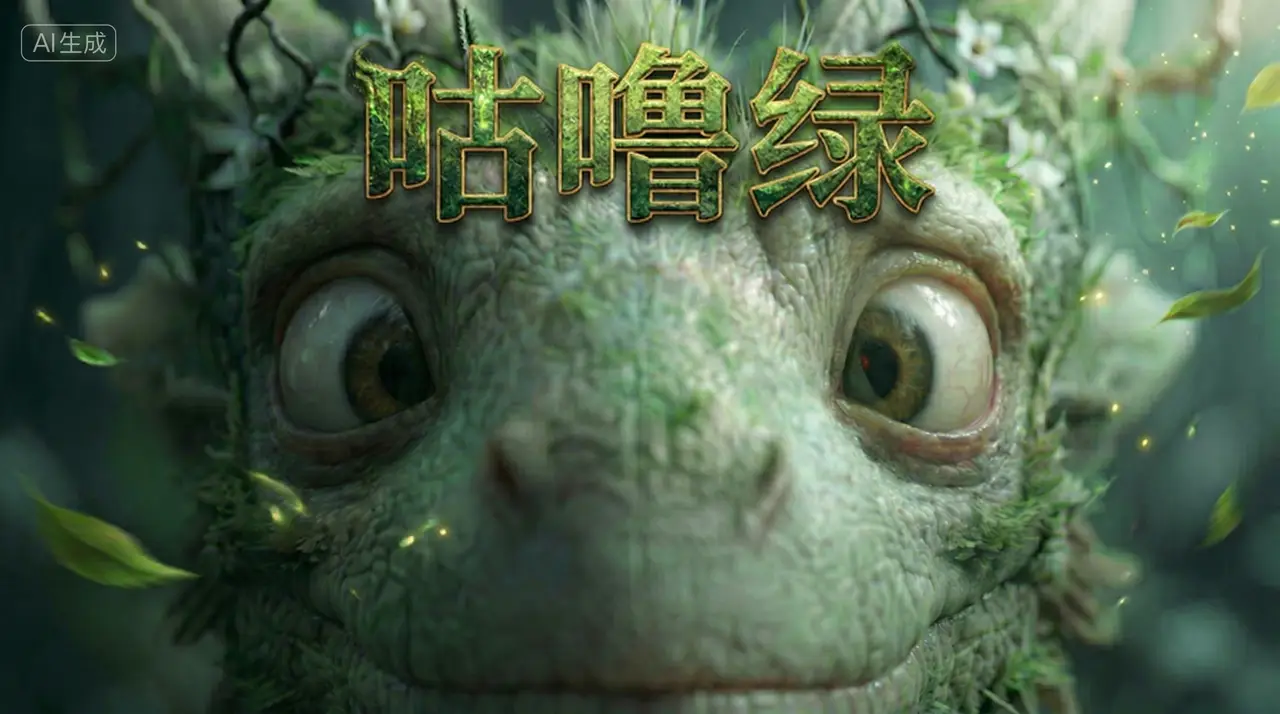
一个电影海报,电影名叫:咕噜绿
A movie poster for a fantasy adventure film titled "GULU GREEN". Close‑up extreme close‑up of a bizarre little dragon creature's face, big expressive cross‑eyes (slightly goofy, lovable), scales in shades of green and moss, jungle leaves and rain droplets in the foreground. Tropical rainforest background with glowing bioluminescent plants and dark mystery. Cinematic lighting, dramatic contrast, deep shadows, rich textures. The title "Gulu Green" in bold, slightly rough fantasy font at the bottom. Film credits style at the top. Epic, mysterious, yet warm and touching. 8k, movie poster composition –ar 2:3
把下边的一堆文字去掉,其余的不变
The overall size of the red fluorescent ant has decreased by one-third
蚂蚁去掉,其余不变
红色荧光蚂蚁往小神兽鼻子上走,小神兽慢慢变成斗鸡眼(Cross-eyed )看着在鼻子上的蚂蚁。镜头推上去。 说明:可以生成音效,不要生成音乐
提取九宫格分镜中的第一行第三列的分镜单图
提取九宫格分镜中的第3行第2列的分镜单图
提取九宫格分镜中的第一行第二列的分镜单图
提取九宫格分镜中的第二行第一列的分镜单图
小龙兽边走边看这些红色荧光蚂蚁,很好奇。 镜头跟拍。 可以生成音效,不要生成音乐。
一个微距镜头,亿万年前的红色荧光蚂蚁。 可以生成音效,不要生成音乐。
蚂蚁太大了,变小
小龙兽边走边看这些红色荧光蚂蚁,很好奇。 镜头跟拍。 可以生成音效,不要生成音乐。
提取九宫格分镜中的第3行,第2列的分镜单图
提取九宫格分镜中的,第2行第3列的分镜单图
小龙兽好奇的将手放在地上,蚂蚁慢慢往它手上爬。 可以生成音效,不要生成音乐。
去掉一个蚂蚁
小龙兽受到红色蚂蚁攻击,蚂蚁快读地往小龙兽身上爬,小龙兽很痛苦不断在挣扎想甩掉蚂蚁。整个动作都是迅速的。 特别快速镜头环绕拍摄,运动感,紧张感。 小龙兽外形参考图2 可以生成音效,不要生成音乐。
小龙兽受到红色蚂蚁攻击,蚂蚁快读地往小龙兽身上爬,小龙兽很痛苦不断在挣扎想甩掉蚂蚁。整个动作都是迅速的。 镜头环绕,运动感,紧张感。 可以生成音效,不要生成音乐。
小龙兽受到红色蚂蚁攻击,蚂蚁不断地往小龙兽身上爬,小龙兽很痛苦。 镜头环绕,运动感,紧张感。 可以生成音效,不要生成音乐。
小龙兽受到红色蚂蚁攻击,蚂蚁快读地往小龙兽身上爬,小龙兽很痛苦不断在挣扎想甩掉蚂蚁。整个动作都是迅速的。 特别快速镜头环绕拍摄,运动感,紧张感。
 图片节点 25
加一只蚂蚁,身体反方向站立
 视频截图视频节点 26
蚂蚁开始往画左爬。摄影机跟拍蚂蚁爬的过程。 可以生成音效,不要生成音乐。